


Introduction
The theory of evolution is rejected by South African educators for social, non-scientific, and mainly religious reasons (De Beer & Henning, 2013; Kyriacou et al., 2015; Naude, 2013; Relela & Mavuru, 2023; Sanders & Ngxola, 2009; Stears et al., 2016; Sutherland & L'Abbé, 2019). Teachers discredit evolution's scientific validity (De Beer & Henning, 2013). They are unable to integrate seemingly unrelated scientific issues using evolution as an organizer (Coleman et al., 2015; Kirsten, 2013; Relela & Mavuru, 2023). They decide to leave some aspects of evolution out of their classes because they are too contentious (Sutherland & L'Abbé, 2019). According to research by Chuene and Teane (2024), teachers had more difficulty incorporating the new life sciences curriculum because their teacher training did not include evolution.
Teachers' acceptance of evolution may affect their willingness to teach the subject, potentially resulting in lower content knowledge, or conversely, a lack of engagement with evolution could lead to lower acceptance and knowledge levels (Hartelt et al., 2022). Acceptance and understanding of evolution can be enhanced by making evolution a priority in the life sciences and eradicating creationism (Wingert et al., 2023). Teachers’ knowledge and acceptance of evolution have not been positively correlated to the quality outcomes of evolution teaching (Abrie, 2010; Nelson et al., 2019), except where the correlation was influenced by other conceptual ecologies (Athanasiou & Papadopoulou, 2015), and “sociodemographic and psychological” variables (Dunk et al., 2017, p. 1).
Before the democratic transition in 1994, evolution was forbidden in South Africa due to pseudoscientific religious biases (Esterhuysen & Smith, 1998; Msila, 2007; Sanders, 2018). After 1994, there was an opportunity for redressing and elimination of all prejudices (Parle & Waetjen, 2005; Pillay, 2011; Stears, 2012), with the 2008 introduction of evolution in schools. The Schools Act of 1996 promoted secular education and prohibited discrimination (Chisholm et al., 2018). Despite this advancement, many South African teachers still reject the theory of evolution (Abrie, 2010; Chinsamy & Plagányi, 2008). According to the Department of Basic Education (2023) research, grade 12 learners in South Africa obtained between 40 and 50 percent on genetics, evolution, mutation, artificial selection, genetic engineering, and human evolution.
When publications in peer-reviewed journals are searched using the keywords “teaching the theory of evolution in South Africa,” studies that come up focus on curriculum materials, intervention and support initiatives, and research reports involving either teachers, learners, or both in basic education and tertiary institutions. According to Tshuma and Sanders (2015) the studies report mainly on three areas, i.e., attitudes and misconceptions (Abrie, 2010; Mpeta et al., 2015; Sanders & Ngxola, 2009), content adequacy (Kyriacou et al., 2015; Relela & Mavuru, 2023; Sanders & Ngxola, 2009; Stears et al., 2016), and curriculum support materials (Sanders, 2018; Tshuma & Sanders, 2015), The research areas offer an alternative viewpoint on the difficulties associated with teaching evolution, While the areas seem separate, there is always an opportunity to combine them and highlight a more comprehensive account of teaching evolution.
A study by Abrie (2010) focused on preservice teachers’ attitudes and willingness to teach evolution. This study focuses on in-service teachers' attitudes, a measure of their understanding and perceptions of the teaching of evolution in schools. Evolution constitutes a significant part of the life science curriculum in South Africa, particularly 22% in grade 12 (Stears et al., 2016), and serves as a pivotal link that binds biological topics (Coleman et al., 2015; Lever, 2002).This study investigates the teaching of evolution in South Africa, compares its findings with global trends, and aims to establish a foundation for future research, such as the relationship between teachers' attitudes and learners' academic performance.
The study utilizes the Likert scale instrument, the measure of acceptance of the theory of evolution (MATE), whose reliability, validity, and consistency were established by Rutledge and Warden (1999). MATE was used on preservice teachers (Abrie, 2010; Coleman et al., 2015) in South Africa. When international comparative analyses are sought, the MATE instrument can be used unaltered (Nunez et al., 2012) despite the criticism of inconsistency across different populations (Smith, 2010; Wagler & Wagler, 2013). This study was done on Tshwane North Education subdistrict in-service high school biology teachers, much like the original reference population (Rutledge & Warden, 1999).
Evolution, by world standards, is a new concept in South African schools, after a long history of deliberate exclusion. According to Pobiner (2016),the failure of life science lessons is predicted by negative attitudes toward evolution, fueled by the poor understanding of evolution. Evolution might be taught by inadequately prepared teachers who might even be contributing to its perpetual ignorance and impoverished life sciences.
The following research questions, among others, served as a guide for our investigation:
What are the teachers’ attitudes (acceptance or rejection) towards the theory of evolution and its teaching in schools?
What are teachers’ levels of understanding of the Theory of Evolution?
What are the teachers’ personal perceptions of teaching evolution in schools?
Teachers’ Attitudes towards Evolution
Attitudes are individual mental evaluations (positive or negative) and beliefs about any attitude object (evolution in this study) that differ in intensity and affectability (Rubenking & Appelbaum, 2019; van Aalderen‐Smeets et al., 2012). A Likert scale, or degree of acceptance or rejection, can be used to measure and quantify the strength and affectability of various mental constructs. According to Deniz et al. (2008), by making thinking contextual rather than fixed, Kearney's approach demonstrates how the human mind and societal norms interact to affect consciousness and moral judgments. A reaction by culturally conscious individuals with a worldview can be predicted precisely and reliably when they are subjected to an external stimulus (Kearney, 1975).
Teachers' intentional decisions and natural tendencies make up their attitudes. They are expressions of the theory of evolution's "evaluations of substantive and syntactical elements", according to Wicker (1969, as cited in Rutledge & Sadler, 2007, p. 332). These self-constructed perceptions are influenced by a variety of social elements, such as age, education, teaching experiences, and personal beliefs. According to Vygotsky (as cited in Fani & Ghaemi, 2011), individuals can adjust their perspectives and integrate past and present information; however, Lemke (2001) argues that it may be unrealistic to expect them to automatically reject their own sociocultural identities. A blend of Lemkian sociocultural theory interpretations (Lemke, 2001) and Vygotskian ZPD scaffolding (Fani & Ghaemi, 2011) is thus used to develop the theoretical framework model needed to respond to study questions.
The scientific community accepts evolution as a credible and revered (Russo & André, 2019; Stears, 2012) explanation of origins; modifications through time; unity in diverse biological forms; and shared ancestry in the natural world (Dobzhansky, 2013; Nadelson & Southerland, 2010; Sciences et al., 1998; Werth et al., 2013). Even though evolution is accepted by scientists, some people disagree with the theory because they believe it contains many falsehoods that have been debunked by prominent scientists, including Stephan Jay Gould, Richard Lewontin, Leslie Dunn, and Theodore Dobzhansky (Graves, 2019). Adults surveyed showed varying degrees of acceptance of evolution: 62% in Great Britain, 61% in Spain, 57% in Argentina, 48% in Russia, 42% in South Africa, 41% in the USA, and 25% in Egypt (Council, 2009). It was discovered that South Africans were less likely to accept human evolution than those from other countries (Lelliott, 2016).
South African teachers often reject the Theory of Evolution (Abrie, 2010; Chinsamy & Plagányi, 2008), due to social faith-based beliefs (Berkman & Plutzer, 2015; Brown & Scott, 2016). They view evolution as ‘speculative’ or ‘hypothetical’ (Nadelson & Sinatra, 2010), and they offer no viable scientific alternative. Evolution presents a competing worldview to the origins of life forms, especially in the field of education (Peralta & Natividad, 2025), challenging the beliefs of South African educators and students (Mukatuni, 2022).
Global studies show poor acceptance and understanding of evolution, with attitudes ranging from total rejection to total acceptance, namely BouJaoude et al. (2011) in Lebanon; Akyol et al. (2012) in Turkey; Rutledge and Mitchell (2002) in the USA, Kim and Nehm (2011), and in Korea and Asghar (2013) in Pakistan and Canada. Teachers maintain antievolutionary stances that may cause distortions in the articulation of the concept (Akyol et al., 2012; Asghar, 2013). According to Deniz and Borgerding (2018), the desire is to promote their theistic positions.
Teachers’ Understanding of the Theory of Evolution
The theory of evolution uses empirical evidence to explain observable facts and events (Dobzhansky, 2013; Gould, 1981), repeated evidence (Deniz et al., 2008; Wiles, 2010), and predictive power (Scharmann, 2020). Ayala (2008) highlights the persistence and scientific integrity of established theories like evolution, cell theory, and heliocentric theory despite numerous tests. Science teachers must effectively communicate these findings (Abraham et al., 2012) despite religious objections. Teachers with a limited understanding of science are more likely to incorporate creationism in biology teaching (Hokayem & BouJaoude, 2008).
Evolutionary theory offers a robust foundation for comprehending the intricacies of the scientific world, linking all biological and related themes (Lever, 2002). The pre-1994 exclusion of evolution in South Africa allowed religious biases towards pseudoscience to prevail (Abrie, 2010; Christie & Collins, 1982; Esterhuysen & Smith, 1998; Msila, 2007; Sanders, 2018). Calvinism, God's sovereignty dominated over Darwinism (Parle & Waetjen, 2005) to maintain “race purity” by racial segregation (S. D. Johnson, 2009, p. 404). Science content was compromised and may be taught by unprepared practitioners, potentially contributing to popular ignorance (Chinsamy & Plagányi, 2008; Dempster & Hugo, 2006; Lever, 2002). Poorly trained teachers can misrepresent evolution, leading to public ignorance and a negative impact on the quality of biological sciences.
A new era dawned with the introduction of evolution post 1994 in South Africa (Chisholm et al., 2018; Parle & Waetjen, 2005; Stears, 2012). The teaching of evolution often leads to debates about dualism and the contradiction between secularism and religion or the evolutionism-creationism dichotomy (Long, 2012). Discussions often escalate into hate speech and blasphemy, disregarding facts and empirical evidence, elevating authoritarian subjective beliefs and intuition.
The evolution content taught across the three grades in the South African education system includes biodiversity/classification, the history of life on Earth, Darwinism and natural selection, and human evolution.
Methodology
Research Design
A mixed-method design was used to combine quantitative (main) and qualitative (minor) approaches to validate the findings, described as "QUAN + qual"(Palinkas et al., 2019, p. 424). When dealing with human subjects, multiple realities cannot be reported only with a single one-dimensional instrument (Akyol et al., 2012; R. B. Johnson et al., 2007; McMillan & Schumacher, 2014).
Sample
There are four subdistricts within the Gauteng province's Tshwane district. Tshwane North (TN), which has 170 schools, is one of these. The subdistrict has 114 secondary schools that teach life science (biology) to learners in grades 10 through 12. Because most schools were close to the Tshwane University of Technology North campus, the location was ideal (Wang, 2024). Resources allowed data to be collected from 54 schools, where a purposive sample of 91 life science teachers in the year 2025 was identified. Grades 10–12 fall within the Further Education and Training band (FET).
Purposive sampling involves selecting a sample based on specific characteristics rather than chance, ensuring that all cases are represented (Campbell et al., 2020). The study included all subdistrict teachers with diverse attitudes, understanding, and perceptions of the theory of evolution, with a believe that the sample will best provide the information to answer the research question (Akpan & Piate, 2023). According to Wang (2024, p. 142) this type of sampling involves choosing "typical," "representative," or pertinent people in the hopes that they will offer pertinent data; in this case, all life science teachers offering evolution in grades 10–12 in the nearby subdistrict.
The teachers were majority Christian, with 76.27% attending religious occasions weekly. The age ranged from 24 to 64, with most (27.47%) between 26 and 30 years old. The sample had 59 female and 31 male teachers (one respondent did not give their sex). The average age was 39.02 years, and the average teaching experience in Life Sciences ranged from 1 to 34 years and averaged 10.23 years. In the sample, 30.77% of teachers teach Life Science in one level, 35.16% in two levels, and 30.77% in all three high school levels.
Data Collection
An established Likert scale questionnaire (Table A1) called Measure of Acceptance of Theory of Evolution (MATE), developed by (R. L. Johnson, 1985), and modified and validated by Rutledge and Warden (1999) was used to: -
Quantify (acceptance or rejection - 20 item Likert scale) teachers’ attitudes towards the theory of evolution, (Table A1), and
Quantify understanding (knowledge of evolution - 21 multi-item) of the theory of evolution (Table A2).
An additional section that contained open-ended questions (5 items) was included to explore the qualitative personal contextual perceptions about teaching the theory of evolution (Table A3).
While research findings on evolution acceptance among researchers can vary with the measurements used (Barnes et al., 2019), the MATE instrument has proved to be a sound measure for acceptance of the evolutionary theory (Sya’bandari et al., 2021). The instrument has proved to be a valid and reliable tool, designed specifically for high school biology teachers (Rutledge & Sadler, 2007), the same reference as the current purposive sample. Mead et al. (2019) describe MATE as a versatile utility tool used across fourteen countries, transcribed into five languages. The MATE instrument can be used for international comparisons (Nunez et al., 2012).
The researchers physically presented one-off, 60-minute questionnaires to the school heads and administrators of 54 schools in the subdistrict. The school administrators handed the research instruments to the respective life sciences teachers in grades 10–12. Participating teachers completed the questionnaires in their free time and sent them back to the principal in sealed envelopes so the researcher could pick them up later. A total of 93 of the 116 questionnaires were returned, where 2 remained incomplete, while 91 were ready to work with.
Measuring Acceptance of Evolution
Participants' MATE score, a total of scaled answers to 20 items, determines individuals' overall attitudes (acceptance or rejection). To prevent bias, the number of positive and negative items (italics), (Table A1), was kept equal (Rutledge & Warden, 1999). The items covered 6 aspects of the theory of evolution: (1) the process of evolution, (2) scientific validity of the theory of evolution, (3) evolution of humans, (4) evidence of evolution, (5) scientific community’s view of evolution, and (6) age of the earth.
While negative replies (disagree/D and strongly disagree/SD) indicate disagreement with any of the 20 statements about the theory of evolution, positive responses (strongly agree/SA and agree/A) show agreement. Participants could also choose the neutral point (undecided / C).
The total of the Likert-scaled (1–5) answers to the 20 items on the MATE instrument (Table A1) determines a participant's overall score (Rutledge & Sadler, 2007). The degree to which teachers agreed or disagreed with a specific construct was measured. Individual scores were used to calculate teachers' scores. To prevent forcing participants to express an opinion when none existed, the neutral point (undecided) was used (Johns, 2010).
The possible maximum score for individuals’ acceptance of evolution was 100, i.e., all E’s crossed out with respect to 10 positively phrased items plus all A’s with respect to the other 10 negatively phrased items.
Weighting for the 10 negatively phrased items was reversed, allowing a minimum score of 20 if all positive items' A's and all negative items' E's were crossed out.
The direction of conviction (agree/disagree) was quantified (extent/percent score, Table A4 and A5). The total individual acceptance of the Theory of Evolution was 100, obtained by adding all the 20 scaled responses (Rutledge & Warden, 1999). Where participants did not make any choice on the scale, a score of zero was allocated.
Because options A and B represent Strongly Disagrees (SD) and Disagrees (D), respectively, they were combined to represent an overall negative response or rejection. Similarly, D (agrees) and E (strongly agrees) were combined to represent agreement or acceptance of the construct. Option C (undecided) was left unchanged (in parentheses, Table A1). Overall acceptance or rejection is indicated by a score or percentage in parentheses in the table. The purpose of this reorganization is to be able to scrutinize individual teachers’ responses to each item that appears on this subsection of the MATE instrument.
Understanding Evolution
To determine participants’ levels of understanding of the Theory of Evolution, a MATE instrument (Rutledge & Warden, 2000), which consists of 21 multi-item modified sub-scales of R. L.Johnson (1985), was used in this study (Table A2). Participants were given 21 multiple-choice questions to answer, each with options numbered alphabetically from A to E. The questions covered aspects of the theory of evolution, including natural selection, extinction processes, homologous structures, coevolution, and evolutionary rates.
Teachers’ perceptions
Open-ended questions (Table A3) were used to reveal the teachers’ perceptions of the theory of evolution. And inductive data-driven thematic analysis (Byrne, 2022) was used to examine the data and determine the frequency of recurrent codes from respondents. Participants were requested to answer the questions by filling in the spaces provided. Individual teachers’ responses were read carefully, recorded (verbatim), summarized, and themes identified. The technique involved grouping recurrent themes. How frequently these themes were cited by individual participants was linked to their overall basis for the acceptance or rejection of evolution. The technique detects a user's opinion from the text and categorizes it into various sentiments or emotions to ascertain how the respondent feels toward an objective item (Zhou & Ye, 2023), such as the theory of evolution. Teachers’ perceptions with respect to evolution were assessed with the aim of showing how they aligned with any of the 6 aspects of the theory of evolution. Out of 91 participants, 61 answered all six open-ended questions.
Results
Measurement of the Acceptance of the Theory of Evolution
The teachers (N=91) obtained an average (percentage) score of 73.6 on the MATE scale (determination of the extent of their acceptance of evolution). The score is calculated as the sum of the Likert-scaled responses (1–5) to the 20 items on the MATE instrument. The score falls within the moderate acceptance range as determined by Rutledge and Sadler (2007), whereby the scores are divided into very high acceptance (89–100), high acceptance (77–88), moderate acceptance (65–76), low acceptance (53–64), and very low acceptance (20–52), and is the sum of the Likert-scaled responses (1–5) to the 20 items on the MATE instrument.
According to the findings, none of the teachers (0.00%) are in the very high acceptance category; similarly, the smallest percentage (3.30%) of teachers were in the very low acceptance range. While the majority (48.35%) are in the moderate acceptance range, a sizable proportion of teachers (41.76%) fell within the low acceptance range of evolution. Only 6.59% of teachers fell within the high acceptance range category (refer to Table A5).
The items on the MATE instrument can be rearranged by their relevance to: process of evolution (2, 9, 11, 12 & 13); the scientific validity of evolutionary theory (1, 7, 8, 14 & 16); the evolution of humans (4 & 18); the evidence of evolution (3, 5, 17 & 20); the scientific community’s view of evolution (6 & 15); and the age of the earth (10 & 19). The groupings are referred to by Rutledge and Sadler (2007, p. 332) as concepts addressed by the MATE. The average scores per grouped items were 74,37, 74,73,72,75; 72,64; 70,44 and75,49, respectively. The results presented in Table 5 and Figure 1 suggest that participants’ scores were the highest with respect to items that concern the age of the earth. The lowest score was obtained on the scientific community’s view of evolution, with average scores of 75.49 and 70.44, respectively.
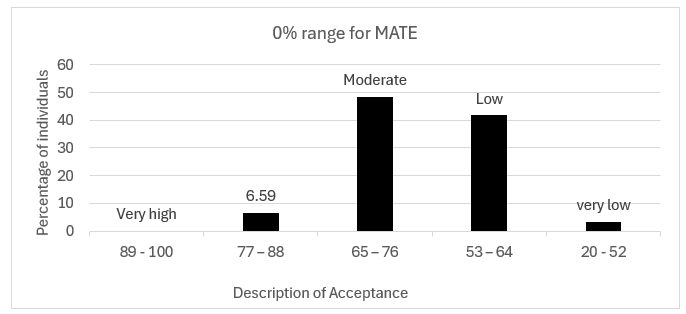
Figure 1. Percentage range for MATE instrument
Regarding the statement that evolution is a scientifically valid theory (item #1), teachers obtained the highest score, 80.00. However, the average acceptance score for all 20 items combined is 73.67.
The following is a report on teachers’ attitudes with respect to the subsections of the TE: -
1. The process of evolution:
Teachers believe that living things are the consequence of evolutionary changes over time, with a score of 79.78 on item #2 (a suggestion that present-day species are the result of millions of years of evolutionary processes), despite having a moderate overall acceptance of evolution (74.37). The idea that life forms may have originated at the same time obtained an average score of 65.49 from teachers.
2. Scientific Validity of the Theory of Evolution:
On the MATE items, which determine acceptance of the TE's scientific validity, teachers overall, averaged a moderate 74.73 (Tables A1 & A5). When responding to item #1, participant numbers showed that 7.69% disagreed, 79.12% agreed, and 13.19% were undecided about whether evolution is a valid theory. Most teachers (69.23%) disagree with item #14, which states that evolution is not a valid scientific theory.
3. Evolution of Humans:
For suggestions that modern humans are products of evolution over the years (item #4) and that humans exist in the same way as they have always been (item #18), the responses averaged 74.07 and 71.43, respectively. The teacher's score was a combined 72.75% in Table A1. Teachers moderately accepted the idea that modern humans are the result of evolutionary processes over millions of years.
4. Evidence of evolution
Teachers agree with item #5 that there is evidence supporting evolution, and they scored 78.24 for item #5; unfortunately, this evidence is ambiguous, according to the respondents, and they scored 59.56 on item #20.
5.The scientific community’s view of evolution
The teachers' score of 70.44 is the lowest average overall score (items #6 and #15) of the six aspects of evolution. Among aspects that measure the acceptance of evolution, teachers seem to be less accepting than the scientific community, which generally does not doubt the theory of evolution.Most participants (89.01%) concur with the assertion in item #6 that scientists view evolutionary theory as a scientifically valid theory. Only 7.69% of participants agreed with the statement on item #15 that scientific communities doubt the existence of evolution.
6. Age of the Earth:
With regards to items #10 (young earth) and #19 (older earth) propositions, participants scored 78.24 and 72.75, respectively.
The following is a report on teachers’ Understanding of the TE: -
Understanding the Theory of Evolution
Participants completed a scale (Table A2) assessing understanding of natural selection, extinction processes, homologous structures, coevolution, analogous structures, convergent evolution, intermediate forms, adaptive radiation, speciation, evolutionary rates, the fossil record, biogeography, environmental change, genetic variability, and reproductive success. The minimum possible score was 0, and the maximum was 21. The teachers scored a low average of 52.80% on the questions about understanding of evolution.
The following is a report on teachers’ perception of the TE: -
Teachers’ Perceptions of Evolution
1. How do you think life forms originated and why?
Teachers responded God created (38.46%), inorganic chemical reactions (11%), simple unicellular organisms (23.08%), no answer (8.79%), and uncertain (4.40%).
2. What influences the way organisms look is the genes, the environment, or anything else, and how?
When asked what affects an organism's appearance, 85 of the 91 participants answered, "both the genes and the environment" (56.47%), "genes" (31.76%), "environment" (9.41%), "environment and god" (1.18%), and "genes and god" (1.18%).
3. Do you believe in the Theory of Evolution and common descent, or not (and why)?
Participants frequently answered "yes" (75.82%), "no" (14.29%), "no answer" (6.59%), and "undecided" (3.30%) when asked if they believed in the theory of evolution and common ancestry. Teachers' reasons for believing in evolution were "Evidence of evolution" (75.76%), "Process of evolution" (15.15%), "Scientific community's view of evolution" (4.55%), and "Undecided" (4.55%), according to an analysis of open-ended questions.
4. What percentage of your teaching time do you spend teaching the Theory of Evolution, and why?
When asked the amount of time they spend on evolution and why, the responses were “for learners to comprehend” (20.88%), “no answer” (9.89%), “because evolution is a framing reference for all topics” (2.20%), and “as the annual teaching plan dictates” (67.03%).
5. Can incorporating the theory of evolution into your lessons enhance learners' comprehension of some or any other biological concepts (or science in general), and how so?
Teachers’ responses frequently indicated “for learners to comprehend” (20.88%), “no answer” (9.89%), “evolution as a framing reference for all topics” (2.20%), and “following the annual teaching plan” (67.03%). Teachers responded overwhelmingly “yes” (81.32%), “no” (5.49%), and “no answer” (13.19%) on whether incorporation of evolution had the potential to improve comprehension of other topics.
Any other comments that you might want to share with the researcher regarding the teaching of the Theory of Evolution?
When asked for additional comments, some responded: -
“The theory of evolution is a very conflicting topic to teach due to differences with religion”; “It is difficult sometimes to teach learners the theory of evolution, as they do not have any knowledge and end up believing more than God”; “Life forms originated from simple ones and gradually became complicated due to changes in the environment since the environment is always changing”; “Remove it from our curriculum”; “It is interesting and makes learners want to know more about life in general. ”.
Discussion
Measurement of the Acceptance of the Theory of Evolution
From the biographical data, 90.11% of teachers are religious, and within the sample, 67% attend religious events either more than once a week, once a week, or monthly. The majority of teachers belong to the Christian faith. While certain reinforced views might not be disproved by a simple demonstration of the validity of science and the evidence of evolutionary mechanisms, according to Silva et al. (2015), people with preexisting beliefs can accept a theory that goes against their core convictions. Pope Jean-Paul II and high-ranking Catholic clergymen are more open to evolution's validity (Berkman & Plutzer, 2015), and acceptance of evolution's significance often correlates with educational attainment (Silva et al., 2014). This suggests that evolution can be implemented in a highly religious setting.
Although the strength of the association between evolution acceptance and non-scientific factors varies among studies, it is often assumed that resistance to evolution is influenced by religiosity (Oliveira et al., 2022). The development of understanding of central concepts can be seriously hampered by the influence of fundamentalist religious faith. Scientific validity and evolutionary mechanisms alone may not dispel assumptions that have been internalized and reinforced as paradigms, potentially resulting in fundamentalism (Lovely & Kondrick, 2008). Ambivalence, with regard to human evolution, is corroborated by other studies (Lovely & Kondrick, 2008; Miller et al., 2006; Nunez et al., 2012). DNA analysis challenges the belief that humans are unique, highlighting the shared phylogenetic relatedness of chimpanzees and humans, while teachers' denialism raises concerns about their weak genetic foundation, referred to as 'human exceptionalism' in Miller et al. (2006, p. 766).
According to Pennock (2002), the most generic form of creation-science is what is known as young-earth creationism. Creationism does not end with its rejection of biological evolution. Discoveries or interpretations are subordinated to the biblical literalist, who holds that religious writings are the only reliable source for the ultimate and correct explanation of the origins of all life forms, including humans (Leão et al., 2020; Miller et al., 2006; Silva et al., 2014).
Understanding the Theory of Evolution
In this sample, the understanding of evolution is lower compared to the studies by Rutledge and Warden (2000) (71%);Trani (2004) (83.4%); but higher than Nunez et al. (2012) (47.9%). The level of understanding of evolution is relatively low for TN sample compared to compared to 85.9 from the study conducted by (Trani, 2004), on Oregon public high schools; 77.59 by (Rutledge & Warden, 2000), on Indiana public high school teachers; significantly similar to 73.79 reported on Korean teachers by (Kim & Nehm, 2011), and higher than 64.4 from Belize teachers in the Caribbean (Nunez et al., 2012) and 50.95 obtained by (Deniz et al., 2008) on Turkish teachers. To improve evolution education, teachers must understand evolution, recognize common misconceptions, and employ effective teaching strategies (Abrie, 2010)
The Theory of Evolution describes a process where isolating mechanisms combine with environmental conditions to effect modifications in populations. According to Penny (2010), evolution leads to divergence in species and probabilities of positive impact on survival prospects. Evolution, as defined by Russo and André (2019, p. 124), is a scientific theory that emphasizes mechanisms like natural selection and mutation and intentionally excludes divine involvement. This focus prioritizes the "how" of evolution over the "why" or "who," thereby maintaining the integrity of scientific discourse regardless of potential divine influence.
Teachers’ Perceptions of Evolution
In a science class, the question of whether God created the world or not is deemed irrelevant. Science cannot differentiate between divine and natural processes. “God may well have created the biological world through natural selection, mutation, speciation, extinction, etc.” (Russo & André, 2019, p. 123). A suggestion of a God-created life eliminates all plausible scientific explanations, thereby undermining science in its entirety.
The developmental outcomes of altered interactions between genes and the environment are called phenotypes. Ignoring either of the two factors could result in racial prejudice and genetic determinism, as well as educational issues with major societal repercussions (Haskel-Ittah et al., 2020). Eugenics and fascist desire to keep alive the Social Darwinism can be avoided (Lever, 2002).
Factors such as age, “a global measure of development that includes maturation and life experiences," according to Schommer (1998, p. 558). People are more inclined to believe in the complexity of knowledge, persevere, and enhance their learning and comprehension of frequently challenging subjects when they reach a certain level of education and knowledge. They perform better than people with negative and "fixed" intellect, unable to change their way of thinking to consider different viewpoints.
When biology is taught correctly, evolution cannot be isolated to a particular event or an item in the annual teaching plan but rather be the prominent thread that connects all the themes (Araujo, 2022; Kampourakis, 2022; Pennock, 2010). However, modern biological systems are influenced by their evolutionary history, paralleling how human history shapes current geopolitical configurations. This evolutionary past is crucial for understanding contemporary biological systems. “Evolution is both the architect and the scaffolding of our current biological knowledge” (James & Wilson, 2002, p. 40).
Some teachers advocate for more theories that are based on their religions, despite the secular curriculum. Success is not always assured by improved scientific teacher qualifications (Nadelson & Sinatra, 2010). According to Yates and Marek (2014), biology students reported increased confidence in their understanding of evolution after completing their curriculum, yet they also developed more misconceptions and became less proficient in the subject. The results indicate that of all the myriads of factors that impede the curricular reform and implementation of evolution education, teachers’ and their learners’ religious beliefs are the most significant. Analysis of open-ended questions indicates that teachers teach evolution strictly according to the syllabus, the annual teaching plan (ATP), or just to help learners pass their examinations. Religion and science frequently clash, particularly in classrooms. While religion brings morals and spiritual meaning, evolution provides explanations based on empirical scientific findings. According to Peralta and Natividad (2025), the two viewpoints can live peacefully, highlighting their significance in promoting a well-rounded view of life. However, teachers should challenge myths and highlight the overlap between sciences and other epistemologies with greater advocacy for evolutionary science in their lessons (Blackwell et al., 2003; Ferguson & Jensen, 2021; Hartelt et al., 2022; Silva et al., 2014). They should not use debates about evolution as justification for incorporating faith-based information in science (Schilders et al., 2009).
Conclusion
Tshwane North District teachers show low acceptance (73.67%) and a correspondingly low average (52.80%) score when tested for the understanding of the theory of evolution. The open-ended questions revealed a pattern of ambivalence and a belief in Godlikeness described by Blackwell et al.(2003) that can impede their understanding of scientific processes. To improve evolution pedagogy, specialized programs should be designed to recognize perceptions, attitudes, beliefs, and content knowledge, allowing practitioners to forge conciliatory pedagogy (Nadelson & Nadelson, 2010) when conflicting epistemologies arise in their offerings (Berkman & Plutzer, 2015). Teachers' lack of motivation, resistance (Nadelson & Southerland, 2010),and understanding challenges, beliefs, and values (Abrie, 2010; Long, 2012) can affect the pedagogy of the theory, thus exacerbating the contentious nature of the subject.
The teaching of evolution must not aim at changing beliefs. “Educators are charged with upholding and exploring the fullness of science wherever it goes, not curtailing it in the name of religion” (Long, 2012, p. 137), Teachers' theistic resistance to evolution theory is a significant obstacle, communities' anti-evolution sentiments can also contribute to reluctance to fully explain evolution (Abrie, 2010; Berkman & Plutzer, 2011). Misconceptions about evolution need to be addressed, emphasizing the distinction between science and religion across both religious and secular contexts, as evolution education is a global concern, not limited to any specific faith (Sanders, 2018). According to Buckberry and Burke da Silva (2012). Teaching techniques like workshops and visits to human evolution museums enhance comprehension and minimize misconceptions about evolution and life sciences (Van Wyk & Badenhorst, 2025).
This study has highlighted the stagnation of evolution education since its formal introduction in 2008. Their acceptance of evolution may be influenced by their correspondingly low understanding of the Nature of Science (NOS) and the scientific processes, a factor that still needs to be explored. According to Miller et al. (2006, p. 766), there is a “politicization of science in the name of religion and political partisanship,” and it happens often when teachers are found impoverished of the scientific knowledge required to make sense of the Theory of Evolution, such as a better understanding of genetics.
Recommendations
South Africa's evolutionary biology in the 70s and 80s evolved uniquely through research in mammalian paleontology, largely due to various progressive institutions. The development is credited by S. D. Johnson (2009) to the country's rich biodiversity and hominid fossil remains. This foundation underscores the importance of teachers acknowledging Darwin’s view that Africa is the "cradle of mankind," as highlighted by Raymond Dart (as cited in Johnson, 2009, p. 404). Teachers should aim to harmonize the coexistence of evolution and faith. Teacher training programs lack sufficient resources for evolution-focused courses (Long, 2012). Volunteering in research offers biology teachers opportunities to support archaeologists and paleontologists, addressing ignorance and creationism. Comprehensive teacher training should extend beyond student internships and in-service training by subject advisory services to address complex topics like evolution.
Limitations
The study was restricted to secondary school teachers in the Tshwane North subdistrict who offer biology (life sciences) classes in grades 10 through 12. The findings cannot be generalized to all teachers. All life science teachers in the Gauteng province could be included in the population. However, it might be troublesome; district support officials and practitioners can be indifferent. However, it should be noted that this issue is not common because others are helpful.
Future research may, for instance, examine the relationship between students' success in the biological sciences and teachers' attitudes and perceptions of evolution. In larger sample trials, probability sampling can be used to examine the causes and effects of factors in evolution education.
Ethics Statements
The studies involving human participants were reviewed and approved by Tshwane University of Technology. The participants provided their written informed consent to participate in this study. The ethical protocols of informed consent, confidentiality, privacy, voluntary participation, and the assessment of risks, benefits, and safety established by Tshwane University of Technology and the Gauteng Department of Education were adhered to. The questionnaire had attached to it a letter that detailed the research's purpose, design, procedures, risks, benefits, and ethical considerations. All participants handed their completed questionnaires in sealed envelopes to the researcher.
The author would like to thank the life sciences colleagues for their insightful inputs, views, and suggestions in shaping the projects. The assistance of the statistician in critically analyzing data is highly appreciated.
Funding
The author would like to acknowledge financial assistance from Tshwane University of Technology.
Generative AI Statement
As the authors of this work, we did not use any AI tools in this work.