


Introduction
Basic education remains a cornerstone of social, economic, and human development globally and in South Africa. Since the advent of democracy in 1994, South Africa has implemented extensive reforms aimed at redressing historical inequalities and improving access, equity, and quality within the education system. Despite these policy advances, persistent challenges remain in learner performance, teaching quality, and overall school effectiveness, particularly in under-resourced and rural contexts (Department of Basic Education [DBE], 2026; Spaull, 2019). These challenges highlight the central role of teachers as the most critical in-school factor influencing learner achievement and school outcomes (Adewoye & Mavhandu-Mudzusi, 2025; Mboweni & Taole, 2022). Nonetheless, evidence suggests that teachers’ ability to function optimally is shaped not only by professional competence, but also by organisational and psychosocial conditions such as job satisfaction, motivation, working relationships, and commitment (Christian & Sayed, 2023; Maseko & Chigeza, 2024).
Teachers in South Africa, often operate under demanding conditions characterised by heavy academic workloads, large class sizes, administrative pressures, frequent curriculum modifications, learner behavioural challenges, and limited support structures. These conditions have significant implications for teacher satisfaction and commitment, which in turn influence learner outcomes negatively (DBE, 2026; du Toit & de Klerk, 2023). Reports indicate that, approximately half of South African teachers intend to leave the profession (DBE, 2026; Hofmeyr et al., 2024). Some of the reasons mentioned include: stress, low morale, and deteriorating working conditions. Such trends raise concerns about teacher retention, continuity of learning, and the sustainability of school improvement initiatives, particularly in rural and disadvantaged areas.
Teacher satisfaction refers to the extent to which educators experience fulfilment and positive attitudes towards their work environment, roles, and professional conditions (Karamane et al., 2025). Research consistently shows that, satisfied teachers are more motivated, demonstrate stronger commitment to their schools, and are more likely to engage in innovative, learner-centred teaching practices (Christian & Sayed, 2023; Karamane et al., 2025; Maseko & Chigeza, 2024). Conversely, dissatisfaction has been linked to burnout, absenteeism, attrition, and diminished instructional quality (du Toit & de Klerk, 2023). Accordingly, teacher dissatisfaction undermines stability and performance within schools (du Toit & de Klerk, 2023; Spaull, 2019).
Closely related to satisfaction is teacher commitment. Teacher commitment reflects educators’ emotional attachment to their schools, their sense of responsibility towards learners, and their dedication to professional and institutional goals (Ilhavenil & Aravindan, 2024). Committed teachers are more likely to persevere in challenging environments, contribute to school improvement initiatives, and promote positive learning environments (Ilhavenil & Aravindan, 2024). However, sustained systemic pressures, limited participation in decision-making, and weak collegial support can erode commitment over time, particularly in rural and resource-constrained schools (Adewoye & Mavhandu-Mudzusi, 2025; Mboweni & Taole, 2022). Emerging studies by Christian and Sayed (2023) and Maseko and Chigeza (2024) further suggest that collaborative professional relationships and teamwork play a crucial role in strengthening both teacher satisfaction and commitment, thereby enhancing teachers’ willingness to engage in collective problem-solving and school development efforts.
Although previous research has investigated teacher satisfaction (du Toit & de Klerk, 2023; Hofmeyr et al., 2024), commitment (Adewoye & Mavhandu-Mudzusi, 2025), and teamwork (Maseko & Chigeza, 2024) separately, studies assessing how these variables interact together to improve teacher efficiency at the basic education level appears limited. Teamwork, in particular, could be an important mechanism for translating teacher satisfaction into increased teacher commitment.
Understanding the triad relationships between teacher satisfaction, commitment and teamwork is essential for informing leadership practices, teacher support strategies, and policy interventions aimed at improving school effectiveness, especially in rural contexts. This study, therefore, investigates the interplay between teacher satisfaction, commitment, and teamwork among sampled primary school teachers in a rural South African education circuit and examines whether teamwork mediates the relationship between teacher satisfaction and commitment.
Literature Review
Teacher Satisfaction
Teacher satisfaction is commonly conceptualised as teachers’ evaluative affective responses to their work, a composite of feelings about the tasks, conditions, relationships and rewards associated with teaching (Eryilmaz et al., 2025a; Karamane et al., 2025). In educational research, satisfaction is not treated as a single, monolithic construct but as a multidimensional concept that typically includes intrinsic satisfaction (satisfaction from the work itself, such as successful teaching and learner progress), extrinsic satisfaction (satisfaction with pay, benefits and working conditions), and relational or contextual satisfaction (satisfaction with leadership, collegial relations and school climate) (Eryilmaz et al., 2025a; Karamane et al., 2025). Scholars such as Assaf and Antoun (2024) and Karamane et al. (2025) also distinguish short-term, situational satisfaction (e.g., satisfaction with a specific task or school year) from longer-term career satisfaction, which influences retention and professional identity.
The theoretical roots of teacher satisfaction draw from classic job-satisfaction models (e.g., Locke; Herzberg’s two-factor theory) and more education-specific formulations emphasizing the moral and relational elements of teaching (Alrawahi et al., 2020). Herzberg’s distinction that hygiene factors (salary, working conditions) prevent dissatisfaction but do not create satisfaction, while motivators (achievement, recognition, responsibility) produce satisfaction has been used to explain why improvements in salary alone often fail to produce sustained gains in teacher morale (Eryilmaz et al., 2025a). According to Eryilmaz et al. (2025a), contemporary work integrates ideas with job-demands or resourcing frameworks: satisfaction arises when job resources (support, autonomy, feedback) are sufficient to meet job demands (workload, emotional labour), thereby reducing burnout and increasing positive affect (Assaf & Antoun, 2024; Eryilmaz et al., 2025a).
Measurement approaches reflect this multidimensionality. Quantitative studies commonly use multi-item scales that capture facets such as satisfaction with curriculum implementation, administrative support, professional growth opportunities, pupil behaviour management and remuneration (Eryilmaz et al., 2025a; Karamane et al., 2025). Qualitative studies add depth to this picture by revealing how teachers interpret these facets in context, for example, how a supportive principal can transform an otherwise heavy workload into manageable and meaningful professional challenge (Darling-Hammond et al., 2020).
Factors Influencing Teacher Satisfaction
A robust body of international and South African research identifies a recurring set of factors that influence teacher satisfaction (Fredeluces & Narido, 2025; Nwoko et al., 2023). These include working conditions (class size, infrastructure, availability of learning materials), leadership and school management (supportive vs. transactional leadership), workload and administrative burden, opportunities for professional development, and remuneration and career advancement prospects (DBE, 2026; Eryilmaz et al., 2025a). Working conditions are frequently the most immediate drivers of dissatisfaction in under-resourced settings: overcrowded classrooms, limited textbooks, and poor infrastructure create daily stressors that blunt teachers’ capacity to teach effectively (Eryilmaz et al., 2025a; Fredeluces & Narido, 2025). Empirical analyses by Eryilmaz et al. (2025a), and Eryilmaz et al. (2025b) find large, consistent links between perceived adequacy of working conditions and overall job satisfaction, including school leadership support and lower workload.
According to See et al. (2026), leadership plays a dual role in influencing teacher satisfaction. This is evidenced in schools where principals influence the distribution of resources, set the moral tone and either enable or constrain teacher autonomy and professional learning (See et al., 2026). Studies by Hompashe (2024) and Nwoko et al. (2023) find that supportive, instructional leadership characterised by clear goals, pedagogical support and distributed responsibility predicts higher teacher satisfaction, whereas punitive or bureaucratic leadership is associated with lower morale (du Toit & de Klerk, 2023; Makirimani & Naicker, 2025). Other studies by Makirimani and Naicker (2025) further suggest that leadership that fosters teacher voice and professional collaboration can mediate the negative impact of other constraints on teacher satisfaction. Another source of consistent dissatisfaction reported by teachers is workload and administrative tasks (DBE, 2026). Teachers report that extensive non-teaching duties, frequent policy changes, and heavy marking loads reduce time for instructional planning and for professional reflection, undermining intrinsic satisfaction derived from teaching (DBE, 2026; Eryilmaz et al., 2025b). One measure to mitigate against teacher workload pressures is teacher Professional development (PD) (Dyosini, 2024). In most cases, PD is positively related to satisfaction when it is perceived as relevant, sustained, and school-based; one-off workshops are less effective and can even frustrate teachers when PD is not connected to classroom realities (Dyosini, 2024; Eryilmaz et al., 2025b). Remuneration may act as a mitigating factor, but remuneration alone does not guarantee high satisfaction; low pay relative to job demands contributes to more stress and signals low societal valuation of the teaching profession, a pattern strongly reported in South African teacher surveys (DBE, 2026). Together, factors such as poor working conditions and low pay increase workload stress and interact to erode satisfaction unless this problem is offset by strong leadership, collegial support and meaningful professional development.
Empirical Evidence of Teacher Satisfaction in South Africa And Internationally
Empirical evidence on teacher satisfaction spans cross-national surveys, large-scale national studies, and localised qualitative research. Internationally, TALIS provides systematic comparative data showing that teacher job satisfaction correlates with working conditions, professional autonomy, and school leadership (DBE, 2026). In countries where teachers report higher autonomy and stronger leadership practices, reports suggest higher job satisfaction and lower attrition intentions (OECD, 2025). Recent large-sample analyses of international assessment data (e.g., TIMSS) reinforce these findings and highlight the moderating role of teacher characteristics relative to demographic factors such as years of experience and gender, as well as national labour market contexts, on job satisfaction outcomes (Eryilmaz et al., 2025a).
Conversely, multiple empirical studies and survey reports from the South African context provide convergent evidence on the drivers and consequences of teacher satisfaction. National-level survey work such as the South Africa TALIS 2024 Country Report documents that while many South African teachers report commitment to their learners and intrinsic satisfaction from teaching, significant proportions express dissatisfaction with pay, working conditions, workload, and the extent of professional support, particularly in rural and township schools (DBE, 2026). Contextual quantitative studies in provincial samples also find that leadership and working-condition variables explain substantial variance in satisfaction scores among teachers (Hofmeyr et al., 2024; Makirimani & Naicker, 2025). Qualitative research adds nuance to teacher satisfaction in under-resourced schools describing a daily reality of improvisation and emotional labour that both sustains a strong sense of vocational commitment and produces chronic stress that undermines long-term satisfaction (Fourie & de Klerk, 2024; Hofmeyr et al., 2024).
A number of South African studies also link teacher satisfaction to learner outcomes either directly (through measured classroom practices) or indirectly (through retention and teacher continuity). For example, research in the Western Cape found associations between higher teacher morale and improved learner performance on provincial assessments, particularly when motivational and resource factors are accounted for (Iwu et al., 2013). Other studies emphasise policy implications: targeted interventions that improve leadership capacity, reduce administrative burden, and strengthen school-based professional development can raise teacher satisfaction and, over time, contribute to better instructional quality and learner achievement (DBE, 2026; Makirimani & Naicker, 2025).
Teacher Commitment
Teacher commitment is a central construct in educational research, reflecting the degree to which teachers identify with their profession, their school, and their learners and are willing to invest sustained effort in their work (Boateng & Ledimo, 2025; Ilhavenil & Aravindan, 2024). Adewoye and Mavhandu-Mudzusi (2025) posit that commitment goes beyond contractual obligation and captures teachers’ psychological attachment, moral purpose, and professional dedication. In school contexts, teacher commitment is regarded as a key driver of instructional quality, stability and school improvement, particularly in challenging environments where external incentives may be limited (OECD, 2025; Boateng & Ledimo, 2023).
Meyer and Allen’s (1997) three-component model is widely accepted as the framework for understanding commitment. This model distinguishes between affective, continuance, and normative commitment. Under Meyer and Allen’s (1997) model, affective commitment is explained as an individual’s attachment to, identification with, and involvement in an organisation or profession. In education, affective commitment manifests as passion for teaching, concern for learners’ success and pride in being a teacher. Teachers with high affective commitment typically remain in the profession because they want to and derive intrinsic satisfaction from teaching and learning processes (Ahakwa, 2024; Boateng & Ledimo, 2025; Mugarura et al., 2026).
Continuance commitment, by contrast, is based on perceived costs associated with leaving the profession or organisation (Ahakwa, 2024). Teachers may remain in their posts due to financial considerations, pension benefits, job security, or limited alternative employment opportunities. While continuance commitment can contribute to workforce stability, it does not necessarily translate into high motivation or instructional innovation (Adewoye & Mavhandu-Mudzusi, 2025; Ahakwa, 2024). In education systems characterised by high unemployment or limited mobility, such as parts of South Africa, continuance commitment may be relatively strong even when affective commitment is weakened by poor working conditions (DBE, 2026).
Normative commitment, on the other hand, refers to a sense of moral obligation or duty to remain in the profession or organisation. In teaching, normative commitment is often linked to ethical responsibility, social expectations and a belief in teaching as a calling or public service (Adewoye & Mavhandu-Mudzusi, 2025; Ahakwa, 2024). Teachers with strong normative commitment remain because they feel they ought to, particularly in communities where education is seen as a pathway to social upliftment. In many South African schools, especially in rural and township contexts, normative commitment is reinforced by teachers’ identification with community needs and historical struggles for educational access (Adewoye & Mavhandu-Mudzusi, 2025; DBE, 2026). These three forms of commitment are not mutually exclusive and often co-exist. However, research suggests that affective and normative commitment are more strongly associated with positive professional behaviours (such as instructional innovation and classroom engagement) than continuance commitment alone (Mugarura et al., 2026).
Teacher Teamwork
Teamwork in educational settings refers to the intentional collaboration among teachers and other school stakeholders to achieve shared instructional and organisational goals (Francis et al., 2025). Compared to individualistic approaches to teaching, teamwork emphasises collective responsibility for learner achievement, shared decision-making, and mutual professional support (Saks et al., 2025). In schools, teamwork typically involves joint planning, co-teaching, collaborative problem-solving, and shared reflection on teaching practices and learner progress (Frelin et al., 2025). These practices are grounded in the recognition that teaching is a complex work that benefits from diverse expertise and collective sense-making (Saks et al., 2025).
From a theoretical perspective, teamwork in schools is closely associated with social constructivist views of learning and organisational theory (Vygotsky, 1978). Knowledge and professional practice are understood as socially constructed through interaction, dialogue, and reflection (Radović et al., 2023; Vygotsky, 1978). In organisational terms, schools are viewed as learning organisations where collaboration enhances institutional capacity and adaptability (Kareem et al., 2025). Within this framework, teamwork is not merely a structural arrangement but a cultural orientation that shapes how teachers perceive their roles and responsibilities (Kareem et al., 2025). In educational research, teamwork is often conceptualised along several dimensions, including task interdependence, shared goals, collective accountability, and interpersonal trust (Frelin et al., 2025; Johnson & Johnson, 2009). According to Saks et al. (2025), task interdependence refers to the extent to which teachers rely on one another to accomplish instructional objectives, such as coordinating curriculum coverage or aligning assessment practices. Shared goals provide direction and coherence, while collective accountability shifts responsibility for learner outcomes from individual classrooms to the school as a whole. Trust and respect among colleagues underpin effective teamwork, enabling open communication and risk-taking (Frelin et al., 2025; Saks et al., 2025). Teachers in South Africa are increasingly expected to collaborate in subject teams, phase committees, and school management structures (DBE, 2015). However, the meaning and enactment of teamwork vary widely across schools. In well-resourced schools, teamwork may involve structured professional collaboration supported by leadership and time allocation. In under-resourced contexts, teamwork often emerges informally as teachers pool resources and provide emotional support to cope with challenging conditions (Christian & Sayed, 2023; Saks et al., 2025).
Benefits of Teamwork for Teachers and Learners
The benefits of teamwork for both teachers and learners are well documented (Christensen & Jerrim, 2025). For teachers, collaboration provides opportunities for professional learning, emotional support, and shared problem-solving. Collaborative planning and reflection enable teachers to refine instructional strategies, align curriculum coverage, and develop consistent assessment practices (Christensen & Jerrim, 2025; Frelin et al., 2025). Collaboration enhances professional confidence and reduces feelings of isolation, which are common in individualistic teaching environments (Rechsteiner et al., 2026). Teamwork also contributes to teacher satisfaction and commitment. When teachers experience supportive collegial relationships and a sense of shared purpose, they are more likely to feel valued and motivated (Christensen & Jerrim, 2025; Rechsteiner et al., 2026). Collaboration promotes collective efficacy, which is the shared belief that teachers can positively influence learner outcomes. Collective efficacy has been linked to improved instructional quality and resilience in challenging contexts (Christensen & Jerrim, 2025). In South African and similar settings, teamwork often serves as a critical coping mechanism that sustains teacher morale and professional identity, particularly where resource constraints are prevalent (Mdlulwa & Sefotho, 2025).
For learners, the benefits of teamwork are reflected in more coherent and responsive teaching (Mdlulwa & Sefotho, 2025). Collaborative curriculum planning reduces fragmentation and ensures progression across grades and subjects. Conversely, in instances where teachers make use of shared analysis of learner data within a school environment, the advantage is that there is early identification of learning difficulties with coordinated interventions (Christensen & Jerrim, 2025; Khasawneh et al., 2023). Schools with strong collaborative cultures demonstrate improved learner achievement, particularly in core subjects such as literacy and numeracy, as teacher teamwork supports shared instructional focus (Christensen & Jerrim, 2025; Khasawneh et al., 2023). Teamwork also supports inclusive education. Collaboration among teachers facilitates differentiated instruction and coordinated support for learners with diverse needs, which is especially crucial in socio-economic contexts of disadvantaged areas (Christensen & Jerrim, 2025; Jama & Lunga, 2024). Furthermore, learners benefit indirectly from the positive school climate associated with teamwork, as respectful and cooperative staff relationships model social behaviours and contribute to a supportive learning environment (Christensen & Jerrim, 2025). While the relationship between teamwork and learner outcomes is complex and mediated by multiple factors (e.g., instructional quality, leadership support), Christensen and Jerrim (2025) and Rechsteiner et al. (2026), suggests that collaboration enhances the conditions under which effective teaching and learning can occur. Teamwork strengthens professional capacity, improves instructional coherence, and contributes to sustainable school improvement (Christensen & Jerrim, 2025; Rechsteiner et al., 2026).
Teacher Satisfaction, Commitment, and Teamwork
Teacher satisfaction, commitment, and teamwork are conceptually distinct yet deeply interrelated constructs that jointly shape school effectiveness and teaching quality. The literature increasingly emphasises that these variables operate in a reciprocal and reinforcing manner rather than as isolated factors (Eryilmaz et al., 2025a; Rechsteiner et al., 2026). Teacher satisfaction provides an essential foundation for commitment and collaborative engagement in the school environment. Previous studies have found positive connections between teacher satisfaction and their work attitudes (Quines & Nino, 2023), as well as commitment (Agad et al., 2025; Werang & Agung, 2017). This suggests that satisfied primary school teachers are more likely than dissatisfied teachers to develop strong emotional attachment to their schools and the teaching profession.
Satisfied teachers are also more inclined to internalise school goals, demonstrate persistence in challenging contexts, collaborate with colleagues, and invest discretionary effort in instructional improvement (Adewoye & Mavhandu-Mudzusi, 2025; Mugarura et al., 2026). In line with this, prior studies have found a positive association between teacher satisfaction and teamwork (Quines & Nino, 2023; Quines & Piñero, 2022). This suggests that satisfied primary school teachers may be more willing to collaborate with colleagues than their dissatisfied counterparts. Such collaboration is more likely to thrive in contexts where teachers feel psychologically safe, valued, and motivated (Saks et al., 2025).
Previous studies have also documented a moderate to strong positive connection between teacher teamwork and commitment in the school environment (Lubega & Sendagi, 2025; Obikoya & Uche, 2026). This suggests that teachers who experience strong collaborative support may be more likely to maintain their loyalty to the school and teaching profession.
Although Quines and Piñero (2022) reported that teacher satisfaction mediated the connection between teacher teamwork and work values, the present study focuses on the relevance of teacher teamwork in the association between teacher satisfaction and commitment. This mediated role requires attention, particularly, given the paucity of literature in the local context. Collaborative cultures characterised by trust, shared decision-making, and mutual support can enhance teachers’ sense of belonging and professional efficacy (Christensen & Jerrim, 2025; Kareem et al., 2025). Participation in professional learning communities and team-based problem-solving can also reduce isolation, strengthen instructional confidence, and reinforce teachers’ sense of purpose. As teachers experience the benefits of collaboration, such as improved learner outcomes and shared responsibility, their satisfaction and commitment may be further strengthened. This can create a virtuous cycle in which effective professional learning communities contribute to enhanced teaching and learning (Christensen & Jerrim, 2025). Consistent with this view, Quines and Nino (2023) reported that teamwork partially mediated the link between teachers’ work attitudes and job satisfaction.
The associations among the constructs assessed in this study can also be understood through systems theory and social exchange theory. Schools that invest in supportive structures and collaborative norms signal that teachers are respected and valued. In turn, teachers may reciprocate through stronger commitment and collective effort (Firestone & Pennell, 1993; Rechsteiner et al., 2026). Conversely, environments characterised by poor working conditions and weak collegial relations may disrupt this cycle, contributing to dissatisfaction, reduced commitment, and fragmented practice.
Conceptual Framework
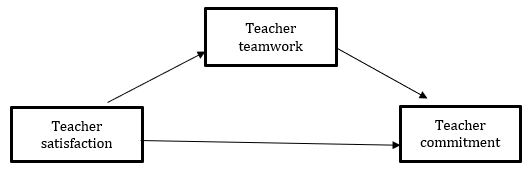
The conceptual framework was developed from the literature review and the researchers’ deductions (Figure 1). It hypothesises that teacher teamwork acts as a significant mediator in the association between teacher satisfaction and teacher commitment. Building on systems theory and social exchange theory, the model suggests that increased teacher satisfaction may stimulate teachers to engage more regularly and meaningfully with their colleagues. Such collaborations may, in turn, increase their commitment to the school. In under-resourced school environments, supportive structures and collaborative norms may help teachers feel respected and valued, encouraging them to reciprocate through commitment and collective effort (Firestone & Pennell, 1993; Rechsteiner et al., 2026). Teamwork may therefore provide a pathway through which teacher satisfaction contributes to stronger commitment in the school environment. The model also proposes direct associations among the three constructs, as discussed above.
Study Hypotheses
The present research hypothesised that:
H1: Teacher satisfaction has a significant positive association with teacher commitment.
H2: Teacher satisfaction has a significant positive association with teacher teamwork.
H3: Teacher teamwork has a significant positive association with teacher commitment.
H4: Teacher teamwork mediates the association between teacher satisfaction and teacher commitment.
Study Objectives
The study objectives are to:
- determine a significant triad relationship between teacher satisfaction, commitment and teamwork within the sample.
- determine whether teacher teamwork significantly mediates the association between teacher satisfaction and teacher commitment.
Methodology
Research Design
A positivist quantitative cross-sectional research tradition was adopted in this study. This approach aided the researchers in collecting the required data within a specific period and also aided in addressing the study objective by employing quantitative data analysis to test both the measurement and structural models (Hunziker & Blankenagel, 2024).
Participants
The study targeted teachers working in primary schools across an underprivileged area in South Africa. First, a stratified sampling approach was utilised to select forty primary schools. In this approach, primary schools in the area were grouped under quintile rankings from one to four. Thereafter, ten schools were randomly selected from each quintile. Second, a convenience sampling technique was used to draw 300 teachers out of a population of 1496 teachers within the focus area. Teachers who willingly showed interest in taking part in the study were included. All questionnaires were returned. The sample size was deemed sufficient since it met the recommended benchmark for CFA analysis (Sürücü et al., 2024). The participants consisted of more females (61.3%) under 40 years old (54.3%), holding at least a bachelor’s degree (45.3%), primarily functioning as teachers (76.3%), and having about 15 years (87%) of teaching experience.
Instruments
A questionnaire was used to collect the data. The instrument included a section to gather teachers’ demographic information: gender, age, position, work experience, and qualification.
The researchers used a self-constructed instrument for the purpose of this study, carefully taking items from the previous literature (Boateng & Ledimo, 2023, 2025; Meyer & Allen, 1997). Thus, Teacher satisfaction was measured with a nine-item section of the instrument. The items reflected teachers’ level of satisfaction with their work, with statements such as “I enjoy my work” and “I feel positive about my work.” Teacher teamwork was measured with a 12-item section reflecting their perceived collaborations in the school environment. The section had statements such as “I have the support of my team members to do my job effectively” and “My team conducts their work in an orderly manner.” Teacher commitment was also measured with a six-item section reflecting the teacher’s perception of loyalty to teaching. The section included statements such as “I am proud to work for this profession” and “I will encourage my friends to join the teaching profession.” All items in the instrument were rated on a 5-point Likert scale ranging from strongly disagree (1) to strongly agree (5). The questionnaire’s construct validity and reliability were evaluated through CFA procedures with the outcome subsequently reported in the results section.
Data Analysis
The study data were examined utilising covariance-based structural equation modeling (CB-SEM), which is suitable for assessing the measurement and structural models simultaneously (Hair et al., 2022). A two-step method was followed. Confirmatory factor analysis (CFA) was used to assess the measurement model. Internal consistency and convergent validity were determined through item loadings, composite reliability (CR), Cronbach’s alpha (CA), and average variance extracted (AVE) (Fornell & Larcker, 1981). Discriminant validity was assessed employing the Fornell–Larcker criterion. Model fitness was assessed employing the root mean square error of approximation (RMSEA), chi-square degree of freedom (CMIN/DF), comparative fit index (CFI), normed fit index (NFI), goodness-of-fit index (GFI), probability of close fit (PClose), and root mean square residual (RMR). Thereafter, the structural model was examined to ascertain the hypothesised connections among the study constructs. A bootstrapping procedure with 5,000 resamples at a bias-corrected accelerated confidence interval of 95% was utilised to determine the significance of the mediated path (Preacher & Hayes, 2008). Hypotheses were deemed significant when the t-values exceeded the 1.96 threshold at the 5% significance level. This statistical approach ensured the reliability and validity of the findings while providing robust empirical support for the proposed model (Hair et al., 2022). Data analysis was performed in SPSS/AMOS 22 software.
Findings/Results
Measurement Model Assessment
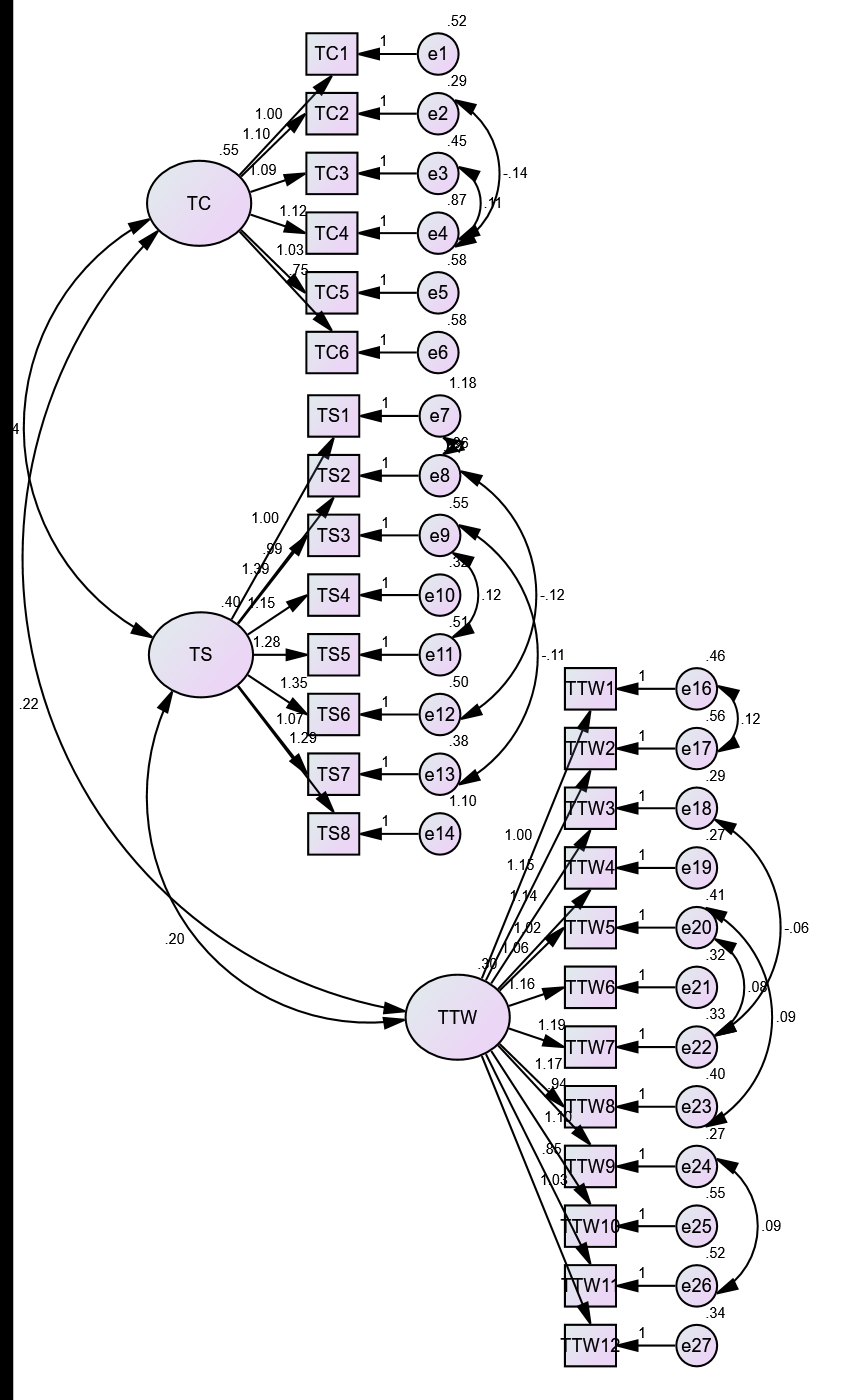
CFA with the maximum likelihood method was utilised to evaluate the measurement model consisting of 3 latent variables, namely Teacher Satisfaction (TS), Teacher Commitment (TC), and Teacher Teamwork (TTW). The initial CFA results are displayed in Table 1.
Table 1. Results of the Initial Measurement Model
| Scale Item | Code | Standardised Loading | t-Value | R-Square |
| Teacher Commitment | ||||
| TC1 | .709 | - | .503 | |
| TC2 | .823 | 13.578 | .677 | |
| TC3 | .788 | 13.013 | .620 | |
| TC4 | .649 | 10.758 | .422 | |
| TC5 | .708 | 11.723 | .502 | |
| TC6 | .588 | 9.750 | .346 | |
| Teacher Satisfaction | ||||
| TS1 | .539 | - | .290 | |
| TS2 | .573 | 7.843 | .328 | |
| TS3 | .772 | 9.395 | .596 | |
| TS4 | .782 | 9.459 | .611 | |
| TS5 | .769 | 9.374 | .591 | |
| TS6 | .754 | 9.277 | .569 | |
| TS7 | .718 | 9.030 | .516 | |
| TS8 | .637 | 8.409 | .406 | |
| TS9 | .434 | 6.481 | .194 | |
| Teacher Teamwork | ||||
| TTW1 | .645 | - | .417 | |
| TTW2 | .642 | 9.916 | .413 | |
| TTW3 | .710 | 10.781 | .504 | |
| TTW4 | .717 | 10.872 | .514 | |
| TTW5 | .706 | 10.733 | .498 | |
| TTW6 | .712 | 10.805 | .506 | |
| TTW7 | .745 | 11.218 | .555 | |
| TTW8 | .720 | 10.91 | .518 | |
| TTW9 | .732 | 11.055 | .535 | |
| TTW10 | .636 | 9.839 | .405 | |
| TTW11 | .584 | 9.132 | .341 | |
| TTW12 | .701 | 10.676 | .492 |
Sample Size (N) = 300. Model Fit Indices: CMIN/DF=3.251; CFI=.839; GFI=.795; NFI=.785; RMR=.075; RMSEA=.087; p-Close=.000
This preliminary AMOS output indicated inadequate model fit (CMIN/DF=3.251; CFI=0.839; GFI=0.795; NFI= 0.785; RMR=0.075; RMSEA=0.087; P-Close=0.000). Thus, following established suggestions, model refinement was carried out through investigating cross loadings, factor loadings, measurement errors, and error covariances (Hair et al., 2010; Hu & Bentler, 1999; Kline, 2023; Schreiber et al., 2006). As a result, item TS9 from the Teacher Satisfaction instrument was deleted because its regression weight was considered lower than the acceptable cutoff of 0.50.
As illustrated in Table 2, the re-specification of the measurement model yielded substantial improvements across all goodness-of-fit indices. The final normed chi-square ratio (CMIN/DF = 2.042) falls comfortably within the recommended threshold of 1.0 to 3.0. Absolute fit measures demonstrate strong performance, with RMSEA (.059) meeting the strict cut-off of <.06 and RMR (0.054) falling well below the <.08 standard. Incremental fit indices showed marked progress: CFI increased from .839 to .934, GFI reached .883, and NFI rose to .879, demonstrating acceptable to good overall fit for the final measurement model.
Table 2. Results of the Model Fit for the Measurement Model
| Measure | Threshold | Initial Model | Final Model | Interpretation |
| CMIN | -- | 1043.429 | 565.734 | -- |
| DF | -- | 321 | 277 | -- |
| CMIN/DF | Between 1 and 3 | 3.251 | 2.042 | Good fit |
| CFI | ≥0.90 | .839 | .934 | Good fit |
| GFI | ≥0.90 | .795 | .883 | Marginal fit |
| NFI | ≥0.90 | .785 | .879 | Marginal fit |
| RMR | <0.08 | .075 | .054 | Good fit |
| RMSEA | <0.06 | .087 | .059 | Good fit |
| PClose | >0.05 | .000 | .017 | Marginal fit |
Notes: Cut-off Criteria for Fit Indexes is based on literature recommendations (Bhale & Bedi, 2024; Hu & Bentler, 1999; Schreiber et al., 2006).
Construct reliability, convergent validity, and discriminant validity
Table 3 presents the results of construct reliability and convergent validity. CA values ranged from.859 to.913, whereas CR values were between.863 and.911, all surpassing the benchmark value of.70 (Hair et al., 2019). This indicates sufficient internal consistency of the final measurement model (Figure 2). Moreover, factor loadings ranged between.602 and.835, while AVE values ranged between.511 and.586, all falling well above the benchmark of.50 (Hair et al., 2019). These findings likewise demonstrate adequate convergent validity of the final measurement model (Figure 2).
Table 3. CFA Results for the Final Measurement Model
| Scale Item | Code | Standardised Loading | Composite Reliability | AVE | Cronbach’s α |
| Teacher Commitment | .863 | .516 | .859 | ||
| TC1 | .716 | ||||
| TC2 | .835 | ||||
| TC3 | .772 | ||||
| TC4 | .660 | ||||
| TC5 | .712 | ||||
| TC6 | .690 | ||||
| Teacher Satisfaction | .892 | .511 | .879 | ||
| TS1 | .602 | ||||
| TS2 | .663 | ||||
| TS3 | .767 | ||||
| TS4 | .781 | ||||
| TS5 | .749 | ||||
| TS6 | .773 | ||||
| TS7 | .737 | ||||
| TS8 | .623 | ||||
| Teacher Teamwork | .911 | .586 | .913 | ||
| TTW1 | .641 | ||||
| TTW2 | .636 | ||||
| TTW3 | .695 | ||||
| TTW4 | .707 | ||||
| TTW5 | .683 | ||||
| TTW6 | .712 | ||||
| TTW7 | .737 | ||||
| TTW8 | .708 | ||||
| TTW9 | .737 | ||||
| TTW10 | .645 | ||||
| TTW11 | .792 | ||||
| TTW12 | .705 |
Sample Size (N) = 300. Model Fit Indices: CMIN/DF=2.042; CFI=0.934; GFI=0.883; NFI= 0.879; RMR=0.054; RMSEA=0.059; P-Close=0.017
Discriminant Validity
Table 4 confirms discriminant validity using the Fornell–Larcker criterion. The square roots of AVE for Teacher Satisfaction (.715), Team Commitment (.718), and Teacher Teamwork (.766) are all higher than their respective inter-construct correlations. This indicates that each construct is distinct and shares more variance with its own indicators than with other constructs. Therefore, discriminant validity is adequately established.
Table 4. Discriminant Validity Analysis
| Constructs | Teacher Commitment | Teacher Satisfaction | Teacher Teamwork |
| Teacher Commitment | .718 | ||
| Teacher Satisfaction | .475 | .715 | |
| Teacher Teamwork | .499 | .534 | .766 |
| Mean | 4.039 | 3.928 | 4.058 |
| Std. Dev. | 0.814 | 0.825 | 0.614 |
Notes: N = 300.
Since the square root of the Average Variances Extracted (values on the diagonal) are greater than the corresponding inter-construct correlations (values off the diagonal), discriminant validity is achieved (Fornell & Larcker, 1981).
Structural Model
Table 5 presents the results of hypothesis testing. The findings indicate that Teacher Satisfaction (TS) has a significant positive association with Teacher Commitment (TC) (β = 0.960, t = 49.851, p < .001), supporting H1. Correspondingly, TS has a statistically significant positive association with Teacher Teamwork (TTW) (β = 0.618, t = 13.576, p < .001), confirming H2. However, TTW has a positive but statistically insignificant association with TC (β = 0.007, t = 0.375, p = .707), offering no empirical support for H3. The model accounts for 38.1% and 79.6% of the variance in TTW and TC, respectively. Moreover, Table 5 reveals that the data have a good fit to the structural model: CMIN/DF (1.679), CFI (0.999), GFI (0.996), NFI (0.996), and RMR (0.023)
Table 5. Structural Model Assessment
| H | Path Relationship | β Estimate | t-Value | p-Value | Interpretation |
| H1 | TS ----> TC | 0.960 | 49.851 | *** | Significant |
| H2 | TS ----> TTW | 0.618 | 13.576 | *** | Significant |
| H3 | TTW ----> TC | 0.007 | 0.375 | .707 | Not Significant |
Notes: R2 for TTW = 0.381; R2 for TC = 0.796; *** p < 0.001; ** p < 0.01; * p < 0.05; N = 300; Model Fit Indices: CMIN/DF=1.679; CFI=0.999; GFI=0.996; NFI= 0.996; RMR=0.023
Furthermore, the mediation results in Table 6 reveal that the direct effect of TS on TC remained statistically significant after introducing TTW as a mediator (β = 0.960, p < 0.001). Nevertheless, the indirect effect was statistically insignificant (β = 0.004, p = 0.776), suggesting TTW does not significantly mediate the relationship between TS and TC. Therefore, H4 is not supported. Figure 3 depicts the structural model.
Table 6. Results of Mediation Test
| H | Path Relationship | Total Effect | Direct Effect (w/ Mediator) | Indirect Effect | Mediation Results |
| H4 | TS ----> TTW ----> TC | 0.965 (***) | 0.960 (***) | 0.004 (n.s.) | No Mediation |
Notes: Standardised coefficients (β) are reported. *** p < 0.001; ** p < 0.01; * p < 0.05; N = 300. Indirect effect: 95% bootstrap CI [−0.023, 0.032], based on 5,000 bootstrap samples.
Discussion
The findings revealed that teacher satisfaction is positively related with teacher commitment among sampled teachers, supporting H1. Sampled teachers who experienced greater satisfaction with teaching job also demonstrated stronger emotional attachment to the teaching profession. This is consistent with the studies linking teacher satisfaction with commitment (Agad et al., 2025; Werang & Agung, 2017).
This finding also aligns with the social exchange theory perspective in which favourable working experiences help sustain teacher’s loyalty to their profession (Eryilmaz et al., 2025a; Firestone & Pennell, 1993; Rechsteiner et al., 2026). Satisfaction reflects teachers’ evaluations of their work, including teaching, leadership, working conditions and collegial relationships (Eryilmaz et al., 2025a; Karamane et al., 2025). Favourable experiences may strengthen teachers’ identification with their profession and willingness to pursue school objectives. This is particularly important in under-resourced settings, where heavy workloads, limited resources and lack of support can adversely affect moral and commitment (Adewoye & Mavhandu-Mudzusi, 2025; DBE, 2026). The finding therefore stresses the importance of teachers’ experiences in the school environment. Consequently, improving teachers' work conditions and morale can strengthen their psychological bond with the profession, learners, and school community.
The finding also revealed that teacher satisfaction is positively related to teacher teamwork, supporting H2. Sampled teachers who are satisfied with their job tend to demonstrate greater support and collaboration in the school environment. This is consistent with prior studies connecting teacher satisfaction with teacher teamwork (Quines & Nino, 2023; Quines & Piñero, 2022). The findings showed that teacher satisfaction is shaped by conditions including supportive leadership, professional development, manageable workloads, adequate working conditions, and collegial relationships (Eryilmaz et al., 2025a; Fredeluces & Narido, 2025; Hofmeyr et al., 2024; Karamane et al., 2025; See et al., 2026). When teachers feel supported and valued, they may be more willing to share knowledge, plan collaboratively and solve problems collectively. On the other hand, administrative pressures, excessive workloads, and inadequate resources prevalent in under-resourced schools’ context can weaken morale and constrain collaboration (DBE, 2026; du Toit & de Klerk, 2023; Makirimani & Naicker, 2025). Satisfaction therefore operates as an enabling condition for teamwork, encouraging knowledge sharing, peer cooperation, and collective school improvement.
While previous studies have reported a moderate to strong positive connection between teacher teamwork and commitment (Lubega & Sendagi, 2025; Obikoya & Uche, 2026), highlighting that teamwork reduces professional isolation and stimulates stronger confidence and belonging (Christensen & Jerrim, 2025; Rechsteiner et al., 2026), our findings proved otherwise. The findings demonstrated that teacher teamwork is not significantly related to teacher commitment, leaving H3 unsupported. This suggests that for this sample, teachers’ experience of strong collaborative support may not influence their willingness to remain dedicated and invested in the teaching profession. This is inconsistent with literature emphasising the role of teamwork in strengthening professional identity and organisational attachment (Christian & Sayed, 2023; Maseko & Chigeza, 2024; Mdlulwa & Sefotho, 2025).
We hypothesised that in under-resourced school contexts, teacher teamwork may mediate the teacher satisfaction – teacher commitment association. The systems and social exchange theories informed this expectation, which simply implies that when schools provide supportive structures and demonstrate respect, teachers may reciprocate through stronger collaboration and commitment. However, the mediation analysis proved otherwise. The findings demonstrated that teacher teamwork does not significantly mediate the teacher satisfaction – commitment relationship, suggesting H4 is unsupported. This may suggest that although teacher satisfaction relates positively with teacher commitment, teamwork does not offer a statistically supported indirect pathway through which teacher satisfaction connects with teacher commitment. This finding is inconsistent with the previous literature demonstrating teamwork partially connects teachers’ favourable work experiences with work attitudes (Quines & Nino, 2023).
Overall, the findings show teacher job satisfaction as an important factor explaining both teacher teamwork and commitment in under-resourced primary schools. School leaders must therefore address issues surrounding teacher working conditions, leadership support and workload while creating opportunities for joint planning, peer learning and problem-solving. These priorities must go hand in hand with recommendations on teacher well-being and collaboration (DBE, 2026; Makirimani & Naicker, 2025). Such support may also contribute to more coherent teaching and improved learner support over time.
Conclusion
This study examined the connection among teacher satisfaction, teacher commitment, and teacher teamwork within sampled primary school teachers in under-resourced areas of South Africa. The findings confirm that teachers who experienced higher job satisfaction also reported higher teacher commitment and more positive collaborative experiences, while teacher teamwork itself did not contribute significantly to teacher commitment. The indirect effect through teacher teamwork proved statistically insignificant within the sample. Thus, the lack of a significant mediating role indicates that teacher satisfaction is directly related to teacher commitment rather than meaningfully functioning through teacher teamwork.
The findings show that teacher commitment should not be considered independently of the organisational and interpersonal conditions in which teachers work. In addition, supportive leadership, manageable workloads, professional development and constructive collegial relationships are important for strengthening teacher satisfaction and collaborative practice. For school leaders and policy makers, in the understudied schools, the results point to the value of improving teachers’ working conditions while providing structured opportunities for joint planning, peer support and collective problem-solving.
This study contributes to understanding the interrelationships among satisfaction, commitment and teamwork within sampled under-resourced South African primary schools.
Recommendations
The findings of this study carry important practical implications for school leaders, education policymakers, and district-level administrators. First, school management should prioritise working conditions that support teachers’ professional well-being. Principals should promote supportive and participatory leadership, recognise teachers’ contributions, encourage appropriate professional autonomy and distribute responsibilities fairly. District authorities should address resource constraints and provide relevant, sustained and consistent professional development. These measures may help reduce avoidable work-related pressures and create conditions in which teachers can remain engaged with their schools and professional responsibilities.
Second, schools should make collaboration an integral part of their organisational practice. Principals and departmental heads should provide regular, protected opportunities for joint lesson planning, moderation, discussion of learner progress and shared problem-solving. Professional learning communities, subject-based clusters and peer-mentoring arrangements can support the exchange of teaching strategies, constructive feedback and collective responsibility for learner development. Such structures should be responsive to each school’s context and should not become an additional administrative burden. In under-resourced school settings, collaboration can also facilitate the sharing of expertise and instructional resources.
Third, district offices and policymakers should integrate teacher well-being and collegial collaboration into school-improvement and teacher-support initiatives. Monitoring and support should consider teachers’ working experiences and the quality of professional relationships, alongside curriculum implementation and accountability requirements. Interventions should be evaluated regularly to establish whether they improve satisfaction, collaboration and commitment. These recommendations recognise that teacher commitment is shaped by both individual work experiences and the organisational environment. Implementing coordinated, context-sensitive support may contribute to a more satisfied, collaborative, and committed teaching workforce and strengthen the conditions for sustained school improvement.
Limitations
Despite its contributions, this study is subject to certain limitations. First, the cross-sectional research design restricts the ability to draw causal inferences. Although covariance-based structural equation modeling enabled the examination of the relationships among these constructs, the design cannot establish temporal precedence or causality. Future research could employ longitudinal or multi-wave designs to investigate how these relationships develop and whether changes in satisfaction precede changes in teamwork and commitment.
Second, the study relied on self-reported questionnaires filled in by the teachers themselves. This kind of data can be unreliable because teachers might give answers that sound good (social desirability), misremember details, or just answer based on how they felt that day. Even though the questionnaire tests proved to be accurate and dependable, using only one source of information is a limitation. Future studies could include extra perspectives such as feedback from peers, evaluation from school leaders, interviews, or school-wide data to get a better picture of what teachers actually experience.
Third, participants were 300 teachers recruited through stratified and convenience sampling from 40 primary schools in an under-resourced South African educational area. The findings therefore reflect the context and should not be assumed to represent teachers in other provinces, school phases or socio-economic settings. Replication across rural and urban schools, different provinces, public and private institutions and other national contexts would help assess the model’s transferability and identify contextual differences in the relationships examined.
The quantitative design also limits insights into how teaches understand and experience satisfaction, teamwork and commitment in their work. Future studies could adopt mixed-methods approaches which incorporate semi-structured interviews or focus groups to explore how leadership practices, collegial relationships, resource constraints and informal support shape these constructs. Such evidence may explain patterns identified statistically and reveal context-specific experiences that structured questionnaires do not capture.
Finally, future research could extend the model by examining potential moderators, including leadership style, school climate, professional autonomy and psychological resilience. Testing whether these factors strengthen or weaken the relationships among satisfaction, teamwork and commitment would provide a more nuanced understanding of the organisational conditions that support teacher commitment, particularly in resource-constrained schools.
Ethics Statements
Permission to undertake the research was obtained from the participating institution (# 2/4/8/645). The study was anonymous and confidential; informed consent was sought, and participation was voluntary.
Generative AI Statement
The authors of this work did not use generative AI or AI supported technologies.