


Introduction
Mathematical problem-solving is an important learning outcome in mathematics and science education and has been associated with students’ metacognitive and self-regulatory strategies (Özcan, 2016). Recent research has also highlighted the relevance of metacognitive thinking, adaptive beliefs, and persistence-related dispositions to students’ mathematics learning and achievement (Davor et al., 2025). Despite its importance, many students continue to experience difficulties when solving mathematical problems (Wang et al., 2022). Recent empirical work has further shown that students’ metacognitive activity during mathematical problem-solving is associated with their problem-solving performance (Zhao & Saleh, 2025).
Mathematical resilience has received increasing attention in mathematics education because of its relevance to how students respond to difficulty, uncertainty, and setbacks during mathematical learning (Akkan & Horzum, 2024; Lee & Johnston-Wilder, 2024; Xenofontos & Mouroutsou, 2023). Although these two systematic reviews have provided significant conceptual clarification and understanding, these reviews also highlight the fact that the present literature is dominated by descriptive and theoretical understanding, and empirical research is scarce in understanding this concept in relation to the broader models of understanding resilience in relation to cognitive and epistemological factors. Empirical evidence also suggests that mathematical resilience should not be interpreted simply as persistence in the face of difficulty. Xenofontos and Mouroutsou (2023), in their systematic review of empirical research on resilience in mathematics education, highlighted the diversity of conceptualizations and measures used to examine resilience and the need for stronger empirical connections between resilience and students’ mathematical learning. More recently, Lumandas and Taja-on (2026) showed that mathematics struggle among college students can persist even when students have greater access to information and technological resources, suggesting that access to resources alone does not necessarily eliminate the difficulties students experience when engaging with challenging mathematical tasks. These findings strengthen the argument for examining resilience alongside cognitive resources such as metacognitive awareness and epistemological beliefs rather than treating persistence as sufficient for successful mathematical problem-solving.
A growing body of empirical evidence identifies metacognitive awareness as a primary antecedent of mathematical resilience. For example, Ozdemir et al. (2024) showed that mathematical metacognitive awareness is a significant predictor of academic resilience. Moreover, Gürefe and Eryılmaz (2025) found that metacognitive awareness is a mediator between preservice teachers’ beliefs about the nature of mathematics and mathematical resilience. Similarly, Gülşen Turgut and Bakır (2024) found indirect effects of metacognitive awareness on mathematical resilience through mathematics anxiety. Recent evidence also indicates that metacognitive awareness is associated with students’ persistence in mathematical problem-solving, suggesting that the ability to regulate one’s thinking may be important when students encounter difficult mathematical tasks (Ugpo et al., 2025). Although these studies are important, they are mostly based on populations such as pre-service teachers and secondary school students, and they mostly focus on mathematical resilience as an outcome variable. Despite these advances, existing studies have largely examined mathematical resilience as either an outcome or an isolated predictor. Consequently, limited attention has been given to how mathematical resilience contributes to students’ mathematical problem-solving alongside other cognitive factors and how students experience resilience when confronting challenging mathematical tasks.
Epistemological beliefs have been associated with students’ problem-solving perceptions and the development of scientific and mathematical literacy (Çarkıt & Kurnaz, 2025; Wang et al., 2022). However, these studies provide limited evidence on how students’ beliefs about mathematical knowledge relate to their strategy selection, reasoning, and engagement during mathematical problem-solving. Although epistemological beliefs have been examined alongside motivational variables such as mathematics interest, metacognitive awareness, and resilience remain insufficiently examined in integrated structural models (Asare, 2025); there remains limited empirical evidence explaining how these beliefs are enacted during authentic problem-solving experiences.
Again, although previous studies have reported associations between metacognitive awareness, epistemological beliefs, mathematical resilience, and mathematical problem-solving (Arianto & Hanif, 2024; Gürefe & Eryılmaz, 2025; Gülşen Turgut & Bakır, 2024; Wang et al., 2022), the evidence remains largely quantitative. For example, Arianto and Hanif (2024) examined the contribution of metacognitive strategies to mathematical problem-solving, whereas Gürefe and Eryılmaz (2025) and Gülşen Turgut and Bakır (2024) examined relationships involving metacognitive awareness, epistemological beliefs, and mathematical resilience. These studies provide useful evidence of statistical relationships but offer limited explanation of how students actually use these cognitive resources when confronted with difficult mathematical problems. In particular, quantitative associations do not fully reveal how students interpret problems, select and adjust strategies, monitor their reasoning, persist after unsuccessful attempts, or respond emotionally to difficulty. A mixed-methods approach can therefore extend the existing evidence by combining estimates of predictive relationships with students’ accounts of their problem-solving experiences (Wibawa et al., 2025).
Furthermore, much of the existing empirical evidence has been generated from cross-sectional quantitative studies conducted in school settings, leaving university students and higher education contexts comparatively underexplored. Consequently, there is a need for a mixed-methods investigation that not only examines the influence of these cognitive constructs on mathematical problem-solving but also explores students’ experiences of applying them while solving mathematical tasks. Addressing this gap will extend current theoretical understanding of the cognitive foundations of mathematical problem-solving while providing empirically grounded evidence to support instructional practices that foster metacognitive awareness, productive epistemological beliefs, and mathematical resilience in higher education.
Research Objectives
- To determine whether metacognitive awareness predicts university students’ perceived mathematical problem-solving ability.
- To determine whether epistemological beliefs predict university students’ perceived mathematical problem-solving ability.
- To determine whether mathematical resilience predicts university students’ perceived mathematical problem-solving ability.
- To explore the cognitive and affective processes employed by university students during mathematical problem-solving.
Research Hypotheses
Based on the theoretical framework and empirical evidence, the following hypotheses were formulated:
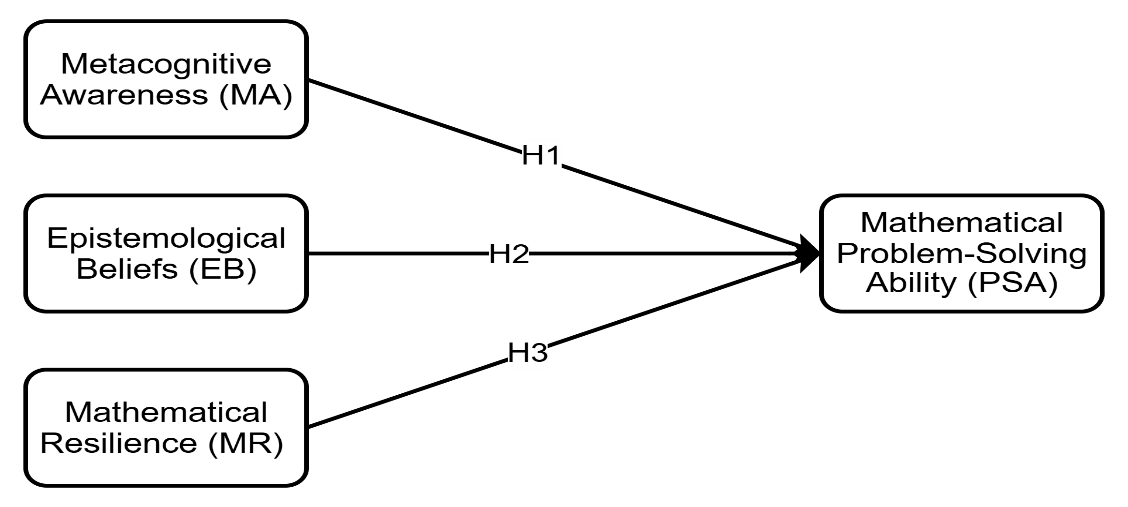
H1: Metacognitive awareness significantly and positively predicts university students’ perceived mathematical problem-solving ability.
H2: Epistemological beliefs significantly and positively predict university students’ perceived mathematical problem-solving ability.
H3: Mathematical resilience significantly and positively predicts university students’ perceived mathematical problem-solving ability.
Research Question
RQ1: What cognitive and affective processes do university students employ during mathematical problem-solving?
Theoretical and Conceptual Framework
This study utilizes Social Cognitive Theory (Bandura, 1986) as the main theoretical framework for understanding how students’ cognitive and personal characteristics relate to their mathematical problem-solving ability. Social Cognitive Theory emphasizes the reciprocal interaction between personal factors, behaviour, and the learning environment. Within the context of the present study, the theory provides a basis for understanding how internal learner characteristics, particularly metacognitive awareness, epistemological beliefs, and mathematical resilience, may be associated with students’ perceived mathematical problem-solving ability (Hidayatullah et al., 2026). The framework therefore provides a theoretical basis for examining how students’ cognitive regulation, beliefs about mathematical knowledge, and responses to mathematical difficulty may be associated with their perceived problem-solving ability.
From the perspective of self-regulated learning, metacognitive awareness involves students’ ability to plan, monitor, and reflect on their thinking while solving mathematical problems. Previous studies have indicated that metacognitive awareness is associated with the use of adaptive learning strategies and mathematical resilience (Ozdemir et al., 2024; Gürefe & Eryılmaz, 2025; Güneş & Taner Derman, 2025; Říčan et al., 2022). These processes are particularly relevant to mathematical problem-solving because students need to determine how to approach a problem, monitor their progress, identify errors, and modify their strategies when necessary. Thus, students with stronger metacognitive awareness may be better able to regulate their thinking during mathematical problem-solving.
Epistemological beliefs refer to students’ beliefs about the nature, development, and justification of mathematical knowledge. Such beliefs can influence how students interpret mathematical tasks, approach unfamiliar problems, and evaluate the validity of mathematical solutions. Previous research suggests that students’ beliefs about mathematics are associated with their approaches to mathematical learning and problem-solving (Çarkıt & Kurnaz, 2025; Wang et al., 2022). From the perspective of Social Cognitive Theory, such beliefs represent personal cognitive factors that may shape students’ behaviour when engaging with mathematical tasks. Accordingly, the present study examines epistemological beliefs as a distinct predictor of perceived mathematical problem-solving ability.
Mathematical resilience refers to students’ capacity to maintain productive engagement with mathematics and continue working when they encounter difficulty, setbacks, or unfamiliar mathematical situations (Lee & Johnston-Wilder, 2024). Previous research has highlighted the importance of resilience in students’ responses to mathematical challenges (Akkan & Horzum, 2024; Xenofontos & Mouroutsou, 2023). However, persistence in itself may not necessarily lead to successful problem-solving outcomes. Students may continue working on a difficult task but still experience difficulty if they lack appropriate mathematical knowledge or problem-solving strategies. Therefore, the present study treats mathematical resilience as a predictor rather than an outcome variable and examines whether students who demonstrate greater resilience also report stronger perceived mathematical problem-solving ability.
Perceived mathematical problem-solving ability is treated as the outcome variable in the present study. It refers to students’ perceived capacity to understand mathematical problems, select appropriate strategies, apply mathematical knowledge, monitor solution processes, and evaluate the reasonableness of their answers. (Arianto & Hanif, 2024; Badolo et al., 2025; Davor, Asare, et al., 2026; Hamenu & Davor, 2026). However, less is known about how perceived mathematical problem-solving ability is associated simultaneously with metacognitive awareness, epistemological beliefs, and mathematical resilience, particularly among university students. The present study therefore examines these three constructs as distinct predictors of perceived mathematical problem-solving ability.
Figure 1 depicts the conceptual framework for the study. Four constructs are included: metacognitive awareness, epistemological beliefs, mathematical resilience, and perceived mathematical problem-solving ability. Metacognitive awareness, epistemological beliefs, and mathematical resilience are specified as predictor variables, while perceived mathematical problem-solving ability is specified as the outcome variable. The framework therefore provides the basis for examining the direct relationships between each predictor and students’ perceived mathematical problem-solving ability. The qualitative component is used to provide further insight into the cognitive and affective processes underlying students’ mathematical problem-solving experiences.
Methodology
Study Design
The study employed a mixed-methods approach to investigate the factors associated with university students’ perceived mathematical problem-solving ability and to explore the cognitive and affective processes involved in mathematical problem-solving. Specifically, a sequential explanatory mixed-methods design was adopted, in which the quantitative phase was conducted first, followed by a qualitative phase. The quantitative phase used a cross-sectional survey design to examine whether metacognitive awareness, epistemological beliefs, and mathematical resilience predicted students’ perceived mathematical problem-solving ability. The qualitative phase was subsequently used to explore students’ cognitive and affective processes during mathematical problem-solving and provide deeper insight into the quantitative findings. The use of a sequential explanatory design was considered appropriate because the qualitative findings could help explain and provide further understanding of the patterns identified in the quantitative phase (Creswell & Creswell, 2018).
Population, Sample Size, and Sampling Technique
The study population comprised undergraduate students studying BSc Mathematics Education at Akenten Appiah-Menka University of Skills Training and Entrepreneurial Development (AAMUSTED), Kumasi Main Campus, Ashanti Region, Ghana. The study focused on students in Levels 200, 300, and 400 because these students had completed basic mathematics education courses and had been exposed to more advanced mathematics topics at the university. The accessible population of students studying Mathematics Education across the selected levels was 2,950 students. For a population of 2,950, the Krejcie and Morgan (1970) procedure indicated a required sample of approximately 340–341 participants. The final sample of 350 therefore exceeded this numerical requirement. However, because convenience sampling was used, the findings should not be interpreted as deriving from a probability sample. Participants for the quantitative phase were selected using convenience sampling. This approach was adopted because data collection was conducted during scheduled lecture periods and participation depended on students’ availability at the time of data collection. Students who were present during the scheduled data collection periods were invited to participate, while those who were absent were not included. Although convenience sampling limits the generalisability of the findings, it was considered appropriate given the accessibility of the participants and the practical constraints associated with data collection.
Data for the quantitative phase were collected using a paper-based, face-to-face questionnaire. The questionnaire was printed and distributed across the selected academic levels, together with an official letter explaining the purpose of the study and assuring participants of the confidentiality and anonymity of their responses. Research assistants were engaged to support the distribution and collection of the questionnaires. Data collection commenced on 13 August 2025 and ended on 27 October 2025. A total of 355 questionnaires were distributed and retrieved. Following data screening, five questionnaires were excluded because of incomplete responses, leaving 350 valid questionnaires for the final analysis.
For the qualitative phase, 10 participants were purposively selected from among the students who completed the quantitative questionnaire. Selection was based on the quantitative findings to ensure that students with different patterns of perceived mathematical problem-solving ability and relevant predictor characteristics were represented in the qualitative phase. The selected students participated in the qualitative inquiry to provide deeper explanations of the cognitive and affective processes they experienced and employed during mathematical problem-solving. This procedure enabled the qualitative phase to follow directly from and provide further explanation of the quantitative findings, consistent with the sequential explanatory mixed-methods design.
Table 1. Demographics of University Students.
| Student Background | Frequency (N) | Percentages (%) |
| Gender | ||
| Male | 190 | 54.3 |
| Female | 160 | 45.7 |
| Level of University Students | ||
| Level 200 | 92 | 26.3 |
| Level 300 | 144 | 41.1 |
| Level 400 | 114 | 32.6 |
As presented in Table 1, Level 300 students constituted the largest proportion of the sample (41.1%), followed by Level 400 students (32.6%), while Level 200 students accounted for 26.3% of the respondents. With respect to gender distribution, male students represented 54.3% of the sample, while female students accounted for 45.7%. The distribution describes the composition of the participants included in the study across gender and academic levels.
Questionnaire Development
This research adopted a structured questionnaire as the main instrument for collecting data. Even though the measurement items were taken from existing studies, it was necessary to validate the items and their understandability through a pilot test to exclude any ambiguous expressions and to ensure that the items were easily comprehensible and relevant (Henríquez-Rivas & Vergara-Gómez, 2025). In this study, the pilot test involved 30 undergraduate students who were chosen randomly from three levels of study (Levels 100, 200, and 300). The pilot study was intended primarily to assess the clarity, comprehensibility, and relevance of the questionnaire items rather than to estimate the substantive relationships examined in the main study. The pilot participants were not included in the final study sample. This questionnaire consisted of five sections. Section A was allocated to demographic information about the students, including gender and level of study. Section B consisted of measurement items about metacognitive awareness, that is, students’ ability to recognize, regulate, and evaluate their cognitive processes that occur while they are engaged in mathematical learning and problem-solving activities. The items in this section were adapted from metacognition scales in mathematics and science education that have been validated in previous research studies (Arianto & Hanif, 2024; Ozdemir et al., 2024).
Moreover, Section C consists of items on students’ epistemological beliefs about mathematics, beliefs about what mathematics is, how it is organized, and what warrants or justifies mathematical knowledge. These items are based on previous work on validated belief scales developed for the purposes of research in mathematics education (Çarkıt & Kurnaz, 2025; Wang et al., 2022). Again, Section D contains items measuring students’ mathematical resilience, which was defined as students’ persistence in mathematics together with the maintenance of productive attitudes toward mathematics when encountering mathematical difficulties. The items were developed drawing on recent research in this area of mathematics education (Akkan & Horzum, 2024; Lee & Johnston-Wilder, 2024). Section E, finally, was related to perceived mathematical problem-solving ability. In this case, students’ confidence in applying thinking skills, strategies, and mathematics concepts to solve simple and complex problems was assessed using items adopted from relevant problem-solving mathematics education literature (Arianto & Hanif, 2024; Badolo et al., 2025; Davor, Boateng, Lotey, et al., 2026). All items were measured using a five-point Likert scale ranging from 1 (strongly disagree) to 5 (strongly agree). The initial pool of items was subsequently subjected to exploratory factor analysis, and only items that satisfied the specified factor-loading criteria were retained for the measurement model. The final instrument retained 22 items across the four constructs.
Common Method Bias (CMB)
Because the predictor and outcome variables were measured using self-reported questionnaire data collected at a single point in time, procedural measures were taken to reduce the potential for common method bias (CMB). Common method bias is concerned with the source of method bias that arises when data for both independent and dependent variables are collected from the same source using the same method (Podsakoff et al., 2003, 2012). Several procedural strategies were used during questionnaire design and administration. Participants were assured that their responses would remain anonymous and confidential, and the items were written in clear and concise language to reduce ambiguity and evaluation apprehension. Positively and negatively worded items were also included where appropriate. Nevertheless, because the predictor and outcome variables were obtained from the same respondents using a single questionnaire, the possibility of common method variance could not be eliminated.
Data Analysis Methods
The statistical analysis of data was carried out using IBM SPSS Statistics version 27 and IBM SPSS Amos version 23. The data collected from the questionnaire were coded and entered into SPSS for data screening and exploratory analysis. Reliability analysis and exploratory factor analysis (EFA) were employed to ensure the reliability of the items of the measuring tool and to determine the number of factors that are involved in the measured variables. Internal consistency reliability was assessed using McDonald’s omega, while composite reliability was evaluated as part of the confirmatory factor analysis. EFA was used to determine the factor structure of the variables. To evaluate the measurement model of the variables, confirmatory factor analysis (CFA) was estimated in AMOS. The evaluation criteria of the measurement model consisted of the coefficients of standardized factor loadings, composite reliability (CR), and average variance extracted (AVE). While the factor loadings and CR evaluated the convergent validity, the square root of the AVE (Fornell & Larcker, 1981; Hair et al., 2012) was used to evaluate the discriminant validity between variables. Having checked the measurement model, the structural equation model (SEM) was used to investigate the predicted relationships among the variables in the study. The qualitative data were analysed thematically. The analysis involved identifying, coding, and grouping recurring patterns in students’ accounts of mathematical problem-solving. The themes were subsequently examined alongside the quantitative findings to provide further explanation of the results.
Results
Data Validity and Reliability
Establishing the validity and reliability of the measurement instrument is essential to ensure that the constructs of interest are measured consistently and accurately. Reliability refers to the consistency of measurement across items intended to assess the same construct (Roberts et al., 2006). In this study, internal consistency reliability was assessed using McDonald’s Omega (ω), which is appropriate for congeneric measurement models, as well as Composite Reliability (CR) (Hair et al., 2012). As presented in Table 2, all constructs demonstrated satisfactory internal consistency, with McDonald’s Omega coefficients exceeding the recommended threshold of 0.70 (Hair et al., 2019; Marsh et al., 2020). Specifically, Metacognitive Awareness (MA) recorded an omega coefficient of 0.924, Epistemological Beliefs (EB) recorded 0.926, Mathematical Resilience (MR) recorded 0.919, and Perceived Mathematical Problem-Solving Ability (PSA) recorded 0.902. These values indicate a high level of internal consistency among the items measuring each construct. Convergent validity was assessed using the standardized factor loadings and Average Variance Extracted (AVE) obtained from the confirmatory factor analysis (CFA). Convergent validity is established when the indicators of a construct demonstrate substantial shared variance and adequately represent the underlying latent construct (Hair et al., 2019).
Table 2. Validity and Reliability of the Study
| Variables | Number of items | McDonald’s Omega (ω) |
| Metacognitive Awareness (MA) | 6 | .924 |
| Epistemological Beliefs (EB) | 6 | .926 |
| Mathematical Resilience (MR) | 5 | .919 |
| Perceived Mathematical Problem-Solving Ability (PSA) | 5 | .902 |
Exploratory Factor Analysis (EFA), KMO, and Bartlett’s Test
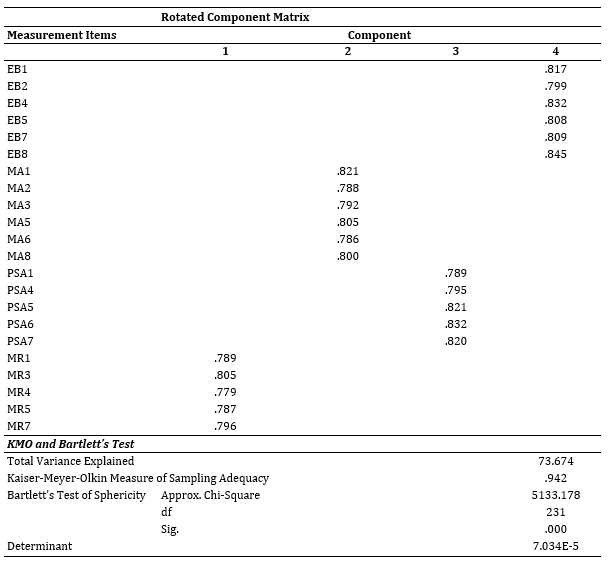
Moreover, exploratory factor analysis (EFA) was conducted to examine the underlying factor structure of the measurement items. EFA is a variable reduction technique used to identify the underlying factors among a set of observed variables (Hair et al., 2014). From the data analysis, the Kaiser-Meyer-Olkin (KMO) measure of sampling adequacy was.942 (see Table 3), exceeding the minimum recommended value of.50 and indicating that the data were suitable for factor analysis (Hair et al., 2014). Bartlett’s Test of Sphericity was significant, with a chi-square value of 5133.178, 231 degrees of freedom, and a significance level of p <.001, indicating sufficient correlations among the measurement items. The determinant of the correlation matrix was 7.034E-5, indicating that the correlation matrix was non-singular. The factor analysis extracted four components, which accounted for 73.674% of the cumulative variance. The rotated component matrix was examined to assess the factor loadings of the measurement items. Items with factor loadings below.50 were excluded from subsequent analyses. The analysis retained 22 items across the four constructs, all of which loaded above.50 on their respective factors. The retained items loaded on their respective components with factor loadings above.50, as presented in Table 3.
Table 3. Exploratory Factor Analysis (EFA)and KMO and Bartlett’s Test
Confirmatory Factor Analysis (CFA)
Using AMOS version 23 software, a Confirmatory Factor Analysis (CFA) was performed to confirm that the measurement model derived from the exploratory factor analysis (EFA) was valid. The retained items for each latent factor were inserted as the indicators for each latent construct to evaluate the construct reliability and convergent validity (see Table 4). The value of all the standardized factor loadings was greater than the recommended value of.50, indicating that all the items measured reliably for their respective constructs. For epistemological beliefs (EB), standardized factor loadings ranged from.801 to.855 (CR =.928; AVE =.681). For metacognitive awareness (MA), the loadings ranged from.795 to.845 (CR =.925; AVE =.674). For perceived mathematical problem-solving ability (PSA), the loadings ranged from.786 to.821 (CR =.902; AVE =.647). Finally, mathematical resilience (MR) recorded factor loadings ranging from.819 to.843 (CR =.920; AVE =.697). All CR values exceeded.70, and all AVE values exceeded.50, supporting construct reliability and convergent validity.
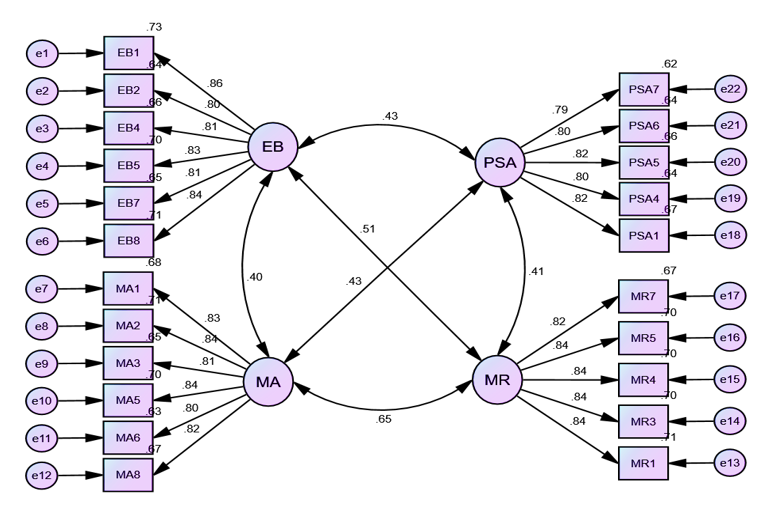
Table 4. Confirmatory Factor Analysis (CFA)
| Measurement items | Loadings |
| Epistemological Beliefs (EB); CR =.928; AVE =.681 | |
| EB1: Mathematical knowledge can evolve and change over time | .855 |
| EB2: Understanding mathematics requires reasoning, not memorization | .801 |
| EB4: Mathematical ideas can be understood from different perspectives. | .811 |
| EB5: Mathematical knowledge is connected to reasoning and evidence. | .834 |
| EB7: There are multiple ways to solve a mathematical problem | .807 |
| EB8: Learning mathematics involves deep understanding, not just answers | .842 |
| Metacognitive Awareness (MA); CR =.925; AVE =.674 | |
| MA1: I plan how to approach a mathematics problem before solving it | .827 |
| MA2: I monitor my steps while solving a mathematics problem | .845 |
| MA3: I recognize when I do not understand a solution step | .807 |
| MA5: I check whether the strategy I am using is helping me solve the problem. | .836 |
| MA6: I adjust my approach when my initial strategy does not work. | .795 |
| MA8: I reflect on my mistakes to improve future problem-solving | .816 |
| Perceived Mathematical Problem-Solving Ability (PSA); CR =.902; AVE =.647 | |
| PSA1: I can apply strategies to solve unfamiliar problems | .821 |
| PSA4: I am confident in solving complex mathematical problems | .803 |
| PSA5: I can identify the important information needed to solve a mathematical problem | .815 |
| PSA6: I can solve problems requiring multiple steps | .798 |
| PSA7: I can transfer mathematical knowledge to new situations | .786 |
| Mathematical Resilience (MR); CR =.920; AVE =.697 | |
| MR1: I am comfortable making mistakes in mathematics | .843 |
| MR3: I believe I can improve in mathematics through effort | .838 |
| MR4: I try different approaches when I get stuck. | .838 |
| MR5: I remain persistent when a mathematics problem is difficult. | .836 |
| MR7: Struggling with mathematics helps me learn better | .819 |
Discriminant Validity Analysis
Discriminant validity was assessed using the Fornell and Larcker (1981) criterion, whereby the square root of the Average Variance Extracted (AVE) for each construct should exceed its correlations with the other constructs. As shown in Table 5, the square roots of the AVE values are presented in bold along the diagonal. The square root of AVE was 0.825 for epistemological beliefs (EB), 0.821 for metacognitive awareness (MA), 0.835 for mathematical resilience (MR), and 0.805 for perceived mathematical problem-solving ability (PSA). In each case, the square root of AVE exceeded the correlations between the respective construct and all other constructs. For example, the highest correlation involving EB was with MR (r = 0.505), which was lower than the square root of AVE for EB (0.825). Similarly, the highest correlation involving MA was with MR (r = 0.645), which was lower than the square root of AVE for MA (0.821). For MR, the highest correlation was with MA (r = 0.645), which was below its square root of AVE (0.835). Finally, from Figure 2 and Table 5, the highest correlation involving PSA was with MA (r = 0.433), which was lower than its square root of AVE (0.805). These results indicate that the constructs demonstrated adequate discriminant validity according to the Fornell and Larcker (1981) criterion.
Table 5. Discriminant Validity
| Variables | CR | AVE | EB | MA | MR | PSA |
| EB | 0.928 | 0.681 | 0.825 | |||
| MA | 0.925 | 0.674 | 0.403*** | 0.821 | ||
| MR | 0.920 | 0.697 | 0.505*** | 0.645*** | 0.835 | |
| PSA | 0.902 | 0.647 | 0.429*** | 0.433*** | 0.411*** | 0.805 |
Note: ***Denotes p-value less than 1% significance level; AVE values are bold
Model Fit Indices
The overall fit of the measurement model was estimated by examining several different Goodness-of-Fit indices in AMOS 23. From Table 6, the values for the Chi-Square statistics were CMIN 331.702, degrees of freedom (df) 203. The ratio of CMIN/DF was 1.634 (which falls within the recommended range of 1 to 3). The incremental fit indices indicated adequate model fit. The Tucker-Lewis index (TLI) was.963, and the comparative fit index (CFI) was.978. All are above the recommended level of.95. The Normed Fit Index (NFI) and Goodness-of-Fit Index (GFI) were 0.932 and 0.948, respectively. Both indices exceeded the commonly recommended threshold of 0.90, indicating an acceptable fit between the hypothesized measurement model and the observed data (Hu & Bentler, 1999). Using error-based indices supported the overall fit of the model. The root mean square error of approximation (RMSEA) was.037, which falls well below the.08 criterion for an excellent approximation of the population covariance matrix. The PClose value was 0.249, which was greater than the recommended significance level of 0.05. This indicates that the hypothesis of close fit cannot be rejected, providing evidence that the RMSEA is consistent with a close-fitting model. Furthermore, the Standardized Root Mean Square Residual (SRMR) was 0.037, which was below the recommended threshold of 0.08, indicating a small discrepancy between the observed and model-implied correlations.
Table 6. The Model Fit Indices
| Measures | Estimates | Standard | Interpretation | Source |
| CMIN | 331.702 | The smaller the better | -------- | -------- |
| DF | 203 | The smaller the better | -------- | -------- |
| CMIN/DF | 1.634 | Between 1 and 3 | Excellent | Xia and Yang (2019) |
| TLI | .963 | > 0.95 | Excellent | Hu and Bentler (1999) |
| CFI | .978 | > 0.95 | Good fit | Hu and Bentler (1999) |
| NFI | .932 | > 0.90 | Good fit | Hu and Bentler (1999) |
| GFI | .948 | > 0.90 | Good fit | Hu and Bentler (1999) |
| RMSEA | .037 | < 0.08 | Good fit | Hair et al. (2012) |
| PClose | .249 | > 0.05 | Excellent | Marsh et al. (2020) |
| SRMR | .037 | < 0.08 | Good fit | Hair et al. (2019) |
Path Results
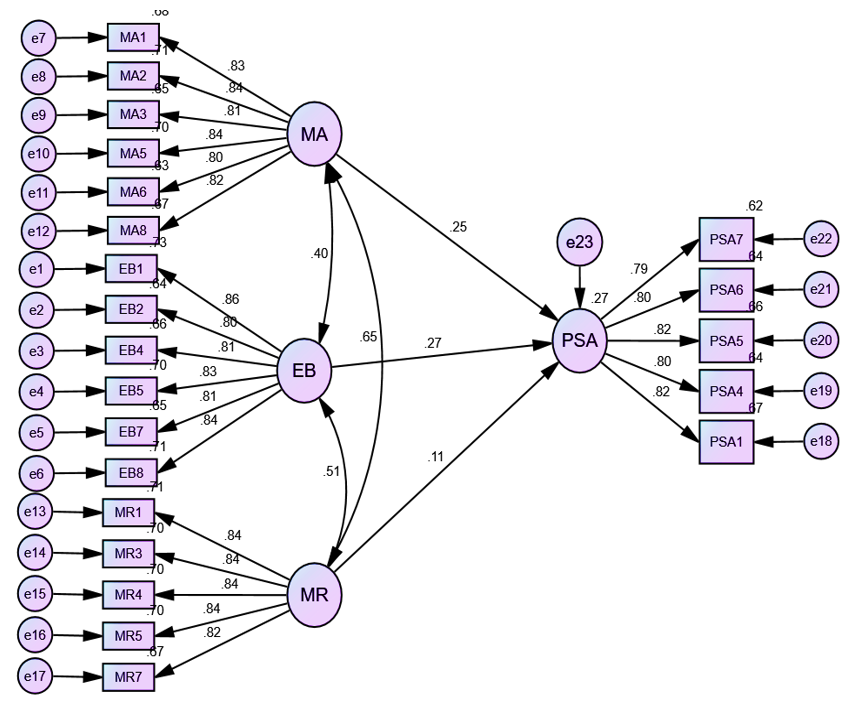
The structural model was analyzed using covariance-based structural equation modeling (CB-SEM) in AMOS (version 23). A bootstrapping procedure with 5,000 resamples and a 95% confidence interval was used to assess the significance of the estimated path coefficients. Table 7 and Figure 3 present the results of the structural model.
Table 7. Path Summary
| Direct Effect | Std. Est. | S. E | CR | p-value |
| MA→PSA | .247 | .074 | 3.338 | <.001 |
| EB→PSA | .273 | .058 | 4.707 | <.001 |
| MR→PSA | .105 | .075 | 1.400 | .163 |
Epistemological beliefs significantly and positively predicted perceived mathematical problem-solving ability (β =.273, CR = 4.707, p <.001). This finding suggests that students’ beliefs about mathematical knowledge are positively associated with their perceived mathematical problem-solving ability. Students who hold more productive beliefs about mathematical knowledge may be more likely to approach mathematical problems in ways that support reasoning and evaluation of solution strategies. The finding implies that mathematics instruction should provide opportunities for students to justify, evaluate, and reflect on mathematical knowledge rather than rely solely on procedural memorization.
Metacognitive awareness significantly and positively predicted perceived mathematical problem-solving ability (β =.247, CR = 3.338, p <.001). This finding indicates that students’ ability to plan, monitor, and evaluate their thinking is positively associated with their mathematical problem-solving ability. The finding implies that mathematics instruction should incorporate activities that require students to plan solution strategies, monitor their progress, identify errors, and evaluate their answers.
However, mathematical resilience did not significantly predict perceived mathematical problem-solving ability (β =.105, CR = 1.400, p =.163). Although the relationship was positive, the evidence was insufficient to conclude that mathematical resilience made a statistically significant contribution to mathematical problem-solving ability in the structural model. This finding suggests that persistence in mathematics may not, by itself, be sufficient to explain differences in students’ problem-solving ability. Further qualitative evidence is therefore important for understanding how students experience and apply resilience when confronting challenging mathematical problems.
Research Question 1: What cognitive and affective processes do undergraduate students employ during mathematical problem-solving?
Regarding the qualitative research question, the qualitative findings revealed several cognitive and affective processes involved in undergraduate students’ mathematical problem-solving. Students’ problem-solving experiences were characterized by problem interpretation, strategic planning, monitoring of solution processes, persistence when facing difficulties, and emotional responses to mathematical challenges. Four main themes were identified: (i) problem interpretation and strategy planning, (ii) monitoring and evaluation of solution processes, (iii) persistence and strategy adjustment, and (iv) emotional responses during problem-solving.
Theme 1: Problem Interpretation and Strategy Planning
The findings indicate that students generally began mathematical problem solving by interpreting the problem and identifying what was required before selecting a solution strategy. Rather than immediately performing calculations, students attempted to understand the information provided and determine an appropriate method. In this way, problem solving involved an initial process of representation and planning.
For example, one participant noted:
“Before I start calculating, I first read the question carefully to know exactly what they are asking. Then I think about the information given and which method I can use to solve it.” (P3)
This response illustrates a deliberate planning process in which the student attempts to understand the problem before engaging in procedural work. Such behaviour reflects an initial cognitive process in which the student focuses on identifying the structure and requirements of the problem before selecting a strategy.
Similarly, another student explained:
“Sometimes I know the formulas, but I don’t just choose any formula. I first look at the type of problem and decide which formula or method will fit it.” (P7)
This suggests that students considered the characteristics of the problem when selecting their strategies. The focus on matching a method to the problem indicates strategic rather than purely procedural engagement.
In addition:
“If I don’t understand what the question is asking, I find it difficult to start. So I normally break the question down and identify what is known and what I need to find.” (P2)
This reflects a problem-representation strategy in which the student decomposes the task into manageable components. This theme indicates that students’ mathematical problem solving involved cognitive processes of interpretation, representation, and strategic planning.
Theme 2: Monitoring and Evaluation of Solution Processes
The findings further indicate that students monitored their reasoning while solving mathematical problems. Rather than waiting until the end to determine whether their solutions were correct, students described checking intermediate steps, reconsidering calculations, and evaluating whether their answers were reasonable.
One participant noted:
“While solving the problem, I check my steps because if I make a mistake at the beginning, it can affect everything that comes after it.” (P5)
This response reflects metacognitive monitoring, as the student actively evaluates the progress of the solution while working through the problem. The student recognizes that errors can accumulate and therefore attempts to identify them during the process. This finding is consistent with recent evidence that students’ metacognitive strategies during mathematical problem-solving involve monitoring their understanding, evaluating solution processes, and adjusting their approaches when difficulties arise (Wibawa et al., 2025).
Another participant noted:
“When I get an answer, I don’t immediately accept it. I go back and check the calculations and see whether the answer makes sense based on the question.” (P6)
This illustrates an evaluative process in which the student assesses both the mathematical procedure and the reasonableness of the outcome. Such behaviour suggests that students viewed problem solving as involving verification and reflection rather than simply obtaining a final answer.
Similarly:
“If I reach a point and the answer doesn’t look right, I go back to the previous steps to see where I may have gone wrong.” (P9)
This response demonstrates backward monitoring, where the student revisits earlier reasoning when an inconsistency is detected. The theme suggests that students employed monitoring and evaluation as important components of their mathematical problem-solving processes.
Theme 3: Persistence and Strategy Adjustment
The findings also indicate that students responded to difficult mathematical problems through persistence and, in some cases, adjustment of their initial strategies. Students described continuing to work when their first approach was unsuccessful and attempting alternative methods when necessary.
For example, one participant stated:
“Sir, when I don’t get the answer with the first method, I don’t normally stop. I try to think of another way or go back and see whether I misunderstood the question.” (P4)
This response illustrates persistence combined with strategic adjustment. The student does not simply continue repeating the same procedure but considers whether an alternative approach may be more appropriate.
Another participant explained:
“Sir, there are times when I become stuck, but after taking some time to think about it, I try another method. Sometimes the second method helps me understand the problem better.” (P8)
This indicates that students’ persistence was sometimes accompanied by flexibility in their approach. The student recognized that changing strategies could provide a new perspective on the problem.
Similarly, one student stated:
“Sir, even when the question is difficult, I keep trying because I want to know where I am making the mistake. But sometimes I can continue for a long time without knowing the correct method.” (P10)
This response provides an important insight into the distinction between persistence and successful problem solving. Although the student demonstrates willingness to persist, persistence alone does not necessarily guarantee an effective solution. This theme suggests that students employed persistence and strategic flexibility when confronting mathematical difficulties. The finding supports recent qualitative evidence that mathematical resilience is expressed through students’ persistence, self-regulation, and adjustment when they encounter difficulties during problem-solving (Callaman & Tagaytay, 2025).
Theme 4: Emotional Responses During Mathematical Problem-Solving
The qualitative findings also revealed that students experienced different emotional responses while engaging with mathematical problems. These included confidence, frustration, anxiety, and satisfaction, depending on the difficulty of the problem and their progress towards a solution.
For example, one participant noted:
“When I understand the first part of the problem, I become more confident because I feel that I can solve the rest. But when I don’t know how to start, I become frustrated.” (P1)
This response illustrates the interaction between cognitive progress and emotional experience. Understanding the initial stages of a problem appears to increase confidence, whereas difficulty in identifying an appropriate starting point may generate frustration.
Another participant stated:
“Hmmm Sir, sometimes I feel nervous when I see a difficult question, especially when I have tried one method, and it is not working. But when I finally find the correct approach, my confidence increases.” (P3)
This suggests that students’ emotional experiences changed as their problem-solving processes developed. Negative emotions were associated with uncertainty and unsuccessful strategies, while successful progress appeared to promote confidence.
Similarly:
“When I solve a difficult problem by myself, I feel satisfied because I know that I have understood the process and not just memorized the answer.” (P7)
This response indicates that successful problem solving can generate positive affective experiences and a sense of competence. The theme demonstrates that students’ mathematical problem solving involved not only cognitive processes but also emotional experiences that accompanied their engagement with challenging tasks.
Discussion
The findings showed that epistemological beliefs were positively associated with students’ perceived mathematical problem-solving ability. This finding is consistent with previous studies indicating that students’ beliefs about the nature, development, and justification of mathematical knowledge influence how they approach mathematical tasks (Çarkıt & Kurnaz, 2025; Wang et al., 2022). One possible explanation is that students’ beliefs about mathematical knowledge may influence how they interpret problems, select appropriate strategies, and evaluate possible solutions. This interpretation is also supported by the qualitative findings, where students described considering the type of problem and deciding which method or formula was appropriate before beginning their calculations. Thus, students’ approaches to problem-solving appeared to involve more than the application of procedures, as they also considered how mathematical knowledge could be used in a particular problem. The finding implies that mathematics instruction should promote opportunities for students to question, justify, explain, and evaluate mathematical ideas rather than focusing exclusively on procedural learning.
The findings also indicated that metacognitive awareness was positively related to perceived mathematical problem-solving ability. This agrees with previous research showing that metacognitive processes are associated with higher-order thinking and problem-solving performance (Arianto & Hanif, 2024; Badolo et al., 2025; Davor, Boateng, Osei-Wusu, et al., 2026; Ozdemir et al., 2024). The relationship may be explained by the role of metacognition in helping students plan their approach, monitor their understanding, recognize errors, and evaluate the effectiveness of their strategies. The qualitative findings provide further insight into this relationship, as students described checking their intermediate steps, reconsidering calculations, revisiting previous steps when an answer appeared incorrect, and evaluating whether their final answers made sense. These accounts demonstrate how students may apply metacognitive processes during actual problem-solving rather than merely reporting an awareness of such strategies. Students who actively regulate their thinking may therefore be better equipped to modify an unsuccessful approach when solving complex mathematical problems. The implication is that mathematics teachers should explicitly integrate planning, monitoring, self-questioning, and evaluation into classroom problem-solving activities.
However, mathematical resilience did not significantly predict perceived mathematical problem-solving ability. This finding differs from recent evidence showing that resilience-related processes can involve persistence, self-regulation, and responses to difficulty during mathematical problem-solving (Callaman & Tagaytay, 2025; Lee & Johnston-Wilder, 2024). The qualitative findings provide a possible explanation for this result. Although students described continuing to work when they encountered difficult problems, persistence was not always accompanied by an effective solution strategy. For example, one participant explained that they could continue working on a difficult problem for a long time without knowing the correct method. This suggests that persistence and successful problem solving may represent related but distinct processes. Students may remain willing to engage with a difficult task while still experiencing difficulties in selecting, monitoring, or adjusting an effective strategy. Thus, resilience may be more beneficial when accompanied by appropriate cognitive and problem-solving resources. This interpretation is consistent with evidence indicating that mathematical problem-solving is also associated with other learner and learning-related resources, including self-efficacy and peer-assisted learning (Davor, Boateng, Lotey, et al., 2026). The finding implies that mathematics education should develop resilience alongside conceptual understanding, strategic knowledge, and metacognitive regulation rather than treating resilience as sufficient on its own.
The quantitative and qualitative findings suggest that students’ beliefs about mathematical knowledge and their ability to regulate their thinking are important dimensions of mathematical problem solving, while persistence alone may not be sufficient to ensure successful problem solving. The study therefore extends previous research by showing that perceived mathematical problem-solving ability should be understood not only in terms of students’ willingness to persist with difficult tasks but also in terms of how they understand mathematical knowledge, regulate their cognitive processes, and adjust their strategies. The qualitative findings further indicate that students’ problem-solving experiences involve interpretation, planning, monitoring, evaluation, persistence, strategy adjustment, and emotional responses. This highlights the need for mathematics instruction that integrates epistemic reflection, metacognitive regulation, strategic problem-solving, and resilience rather than addressing these dimensions separately.
Conclusion
This study examined the influence of metacognitive awareness, epistemological beliefs, and mathematical resilience on university students’ perceived mathematical problem-solving ability and explored the cognitive and affective processes involved in mathematical problem-solving. A mixed-methods approach was used, combining quantitative data from 350 undergraduate students with qualitative evidence from 10 students. The quantitative data were analysed using structural equation modelling in AMOS version 23, while the qualitative data provided further insight into students’ problem-solving experiences.
The findings showed that epistemological beliefs and metacognitive awareness were significant positive predictors of perceived mathematical problem-solving ability. In contrast, mathematical resilience did not significantly predict perceived mathematical problem-solving ability. The qualitative findings complemented these results by showing that students engaged in problem interpretation, strategy planning, monitoring and evaluation, persistence, strategy adjustment, and experienced varying emotional responses while solving challenging mathematical problems. In particular, the qualitative evidence suggested that persistence did not always result in successful problem solving when students were unable to identify or adjust an effective strategy.
The findings suggest that mathematical problem-solving involves more than students’ willingness to persist with difficult tasks. Students’ beliefs about mathematical knowledge and their capacity to regulate their thinking appear to be important dimensions of successful problem-solving, while resilience may be more effective when accompanied by appropriate cognitive and strategic resources. The study therefore highlights the importance of mathematics instruction that integrates epistemological reflection, metacognitive regulation, strategic problem-solving, and resilience to support students’ mathematical problem-solving development in higher education.
Recommendations
The findings of this study suggest several implications for mathematics teaching and future research. First, future studies should employ longitudinal or experimental designs to examine whether metacognitive awareness, epistemological beliefs, and mathematical resilience contribute to changes in perceived mathematical problem-solving ability over time. Such designs would provide stronger evidence regarding the direction of the relationships identified in the present cross-sectional study. Comparative studies involving students from different universities, programmes, and educational contexts would also be useful in determining whether the findings are consistent across different groups of undergraduate students.
Second, mathematics educators should incorporate activities that explicitly develop students’ metacognitive awareness during problem-solving. Reflective questions, think-aloud activities, solution monitoring prompts, and opportunities to evaluate completed solutions can encourage students to plan their approaches, monitor their progress, identify errors, and reconsider unsuccessful strategies. These practices are particularly relevant given the significant relationship observed between metacognitive awareness and perceived mathematical problem-solving ability.
Third, greater attention should be given to students’ epistemological beliefs about mathematics. Instruction can provide opportunities for students to justify mathematical claims, compare alternative solution methods, explain their reasoning, and evaluate the validity of solutions. Such practices may help students move beyond viewing mathematics primarily as a collection of rules and procedures and engage more actively with the reasoning and justification underlying mathematical knowledge.
Although mathematical resilience was not a significant predictor of perceived mathematical problem-solving ability in the present study, its positive but nonsignificant relationship indicates that persistence remains relevant to students’ experiences of mathematical difficulty. However, the qualitative findings suggest that persistence alone may not always lead to successful problem solving. Mathematics educators should therefore develop students’ persistence alongside strategy selection, strategic flexibility, conceptual understanding, and metacognitive regulation. Students should be encouraged not only to continue working on difficult problems but also to recognize when an approach is ineffective and consider alternative strategies.
Finally, mathematics education programmes and professional development initiatives should support educators in designing learning activities that integrate metacognitive regulation, productive epistemological beliefs, strategic flexibility, and constructive responses to mathematical difficulty. Such an integrated approach may provide students with opportunities to engage with challenging mathematical problems while developing the cognitive resources needed to approach, monitor, and evaluate their solutions effectively.
Limitations
The present study has some limitations that should be considered when interpreting the findings. First, the quantitative data were collected from undergraduate students at one university in the Kumasi Metropolis. The institutional context, instructional practices, and characteristics of students may differ from those of other universities and educational settings. Therefore, caution should be exercised when generalizing the findings beyond the study context. The use of convenience sampling also limits the representativeness of the sample, as students who were available during the data-collection period were more likely to participate than those who were absent.
Second, the cross-sectional nature of the quantitative phase means that the relationships among metacognitive awareness, epistemological beliefs, mathematical resilience, and perceived mathematical problem-solving ability were examined at a single point in time. Consequently, the significant relationships identified in the structural model should not be interpreted as evidence of causal effects. Longitudinal or experimental research would be necessary to establish the temporal direction of these relationships.
Third, the quantitative measures relied primarily on students’ self-reports. Although procedures were used to support confidentiality and reduce potential response bias, self-reported responses may still be influenced by social desirability, individual interpretation of questionnaire items, or students’ perceptions of their own abilities. In particular, the study assessed students’ perceived mathematical problem-solving ability rather than their performance on objectively scored mathematical tasks. Therefore, the findings should be interpreted as reflecting students’ perceptions of their problem-solving capability rather than direct evidence of demonstrated mathematical problem-solving performance. In addition, the qualitative phase involved only 10 students; therefore, the qualitative findings provide contextual insight into students’ problem-solving experiences rather than being representative of the wider undergraduate population. Also, the exploratory and confirmatory factor analyses were conducted using the same overall sample. Although both analyses supported the proposed measurement structure, the CFA therefore did not provide an independent cross-validation of the factor solution. Future studies should validate the measurement model using an independent sample or a split-sample approach where a sufficiently large sample is available.
Finally, the structural model considered only metacognitive awareness, epistemological beliefs, and mathematical resilience as predictors of perceived mathematical problem-solving ability. Other factors, including prior mathematical achievement, mathematics anxiety, motivation, mathematical knowledge, instructional practices, and peer learning experiences, were not included in the model. Future research could incorporate these factors and examine how they interact with the cognitive and affective processes identified in the present study. Longitudinal mixed-methods studies could also provide a more detailed understanding of how students’ metacognitive processes, epistemological beliefs, resilience, and problem-solving practices develop over time.
Ethical approval for this study was obtained from the Mathematics Education Research Ethics Committee of Akenten Appiah-Menka University of Skills Training and Entrepreneurial Development (AAMUSTED) (Ref. No.: AAMUSTED/IERC/2025/104). All participants provided written informed consent before their inclusion in the study. Consent was also obtained from the heads of departments and lecturers, as well as from the participating students, in accordance with the ethical standards outlined by the Committee and the Declaration of Helsinki.
Conflict of Interest
The author confirms that there were no conflicts of interest related to the study.
The data supporting the findings of this research can be obtained from the corresponding author upon request.
Funding
No financial support was provided for the study.
Authorship Contribution Statement
Davor: Developed conceptualization, introduction, methodology development, analysis, interpretation, and manuscript writing. Boateng: Contributed to conceptualization, data analysis, manuscript writing, and interpretation. Larbi: Contributed to conceptualization, data analysis, and manuscript writing. Oppong: Contributed to data collection, data analysis, interpretation, and methodology.
Generative AI Statement
No generative AI tools were used in the writing of this article