


Introduction
What do social scientists mean when they refer to methodology? What frameworks are available to facilitate systematic analysis of a single methodology or systematic comparison of multiple methodologies from within or across paradigms? There is even ambiguity around whether the write-up of an inquiry should (or even can) describe, label, or give a section heading to the inquiry’s methodology (versus its methods). Care should be taken not to conflate methodology solely with technical method applications, nor methodology solely with philosophy. The former risks a narrow conception of methodology synonymous with nuanced method applications detached from underlying assumptions. The latter risks an assumption-based conception of methodology detached from method practice.
Statement of the Problem
Review of the literature on methodology for examples of broad, overarching methodological frameworks suitable for inter- and intra-paradigm methodological analysis revealed several deficiencies. There is significant diversity in both the definitions of methodology and the descriptions of the components that comprise a methodology (e.g., Bryman, 2008; Kaplan, 1998;Popkewitz, 1990; Schwandt, 1990). Further, the diversity of definitions and parts of methodology lacks coherence and thus results in a conceptual problem for inquirers. It’s unclear how methodology should be defined, but it’s also unclear what pieces and parts holistically comprise a methodology. The whole-part relationship is broken between the overarching definition of methodology and compatible sets of underlying methodic practices. The inconsistent and sometimes conflicting definitions at the level of the whole fail to adequately inform an analysis of its parts. A similar incongruence at the level of the parts fails to adequately inform an analysis of the whole (e.g., the part-whole relationship).
This dilemma leaves those seeking conceptual clarity on methodology void of two key structures: (a) a big picture view within which to organize, connect, and make sense of the diversity of methodological definitions and parts, and (b) a framework within which to guide analysis or emphasis of any particular feature of methodology without detaching from an understanding of the particular in relation to the whole. Several key gaps in the literature need resolution: representative definition(s) of methodology, synthesis of the wide range of methodological parts (or decision points), and a comprehensive conceptual framework for methodology that integrates definitions with decision points across levels of abstraction. The result would provide an inclusive, holistic, and “coherent” (Guba & Lincoln, 1988, p. 108) organizational scheme for the phenomenon of methodology. Therefore, the current manuscript explored literature about and relating to methodology with the aim of qualitative hermeneutic synthesis, focusing on both the definitions (i.e., the whole) and components (i.e., the parts) of methodology.
Research Questions and Objectives
Four general research questions guided the study of literature on methodology:
1. In what ways is methodology defined?
2. How can methodology be comprehensively defined?
3. What components comprehensively comprise a methodology?
4. How might methodology be conceptualized, inclusive of an overarching definition and component parts?
The objectives of the study were to (a) describe, document, and synthesize the diversity of definitions and components of methodology and (b) synthesize a more inclusive and mutually informing conceptualization of the organization of methodology.
Background
The observed incongruence among definitions of methodology dates at least as far back as Abraham Kaplan’s (1998) writing on methodology, in which he presented a contrast of how scientists were using the term methodology. The contrast included a distinction in use as reference to the discipline of study versus the subject matter of study and four distinct uses of methodology as subject matter (i.e., epistemology, methods, techniques, and honorifics). Even though numerous insightful definitions of methodology can be found by just as many insightful authors in subsequent years, few definitions were ever presented against the backdrop of historically inconsistent definitions. Kaplan’s observation nearly six decades ago seems to have remained a historical burden rather than a corrective lesson.
In 2008, Alan Bryman re-presented the case that “there are relatively few examinations of what we mean by methodology” (p. 159). His research on the practices and publication trends of mixed-method researchers uncovered some cases of Kaplan’s honorifics, where the methodological approach described for publication might intentionally differ from the methodology executed for the study. The honorific definition of methodology was for the purpose of achieving a status acceptable for the publication outlet, i.e., methodology was being defined by what was “attractive in certain quarters” (p. 164) rather than by an underlying justification in the research. Where findings were reflective of the actual research, opposed to honorifics, Bryman discovered definitions of methodology that focused on an analysis of the assumptions underlying practice and/or an analysis of the actual practices used. Ultimately, he concluded that term methodology aligned with both the study of method rationale and method employment (i.e., methodology “is concerned fundamentally with the nature of what I would call methodic practice. That is, it is concerned with revealing in a systematic manner the practices of researchers and the ideas and presuppositions that lie behind those practices” [p. 167]). While there is both sufficiency and breadth to Bryman’s methodological definition, it falls short of providing any traction towards a conceptualization of the content of methodology (i.e., specifically what practices, ideas, and presuppositions). The definition is broadly inclusive and empirically based, but it does not, however, do much to support an analysis of its parts.
Methodology
Perspective(s) or Theoretical Framework
The general analytic process was very much one of imaginative puzzle solving. There was no guarantee that a solution of the sort I hoped for existed. Initially, I felt as though I was attempting to put together a puzzle of unknown shape, without a picture to refer to, and without any defined puzzle pieces; only the desire to work on the puzzle and generate a meaningful picture. I had to use a lens on the world that allowed me to (a) look with intention for sources that might contain puzzle pieces and then (b) further look within the sources for what might be a puzzle piece (e.g., Is this text defining or describing an aspect of methodology? How does this definition give meaning to the pieces? How do these pieces give substance to the definition?). Every time I found a potential puzzle piece, I had to imagine the multitude of ways it might connect with prior pieces. The process required a lot of stepping back to see what shape and picture was coming together, and then, often in frustration, scattering pieces everywhere and starting over with only a better idea of what the puzzle might not look like.
Formally, the analytic approach was a hermeneutic synthesis. As a starting point, I began by framing the literature about methodology in a hermeneutic dialectic between whole and parts. The point-counterpoint cognitive style of thinking was intended to explicitly position the gap in our understanding within the tension between how methodology was defined (RQ1 & RQ2) and how we thought about the parts of our inquiries that comprise a methodology (RQ3). The incompatible contrast of definition and concepts of parts demanded a coherent resolution (RQ4). Data collection and data analysis proceeded simultaneously as I embraced the diversity of opinions on the topic. Acting in this manner required departing from a reductionist aim and recalibrating towards an expansionist aim that sought to bring together and synthesize the diversity of ideas. In doing so, I aimed to construct an organizational scheme that was both (a) internally consistent and (b) in harmony with all opinions on the topic, i.e., a scheme that was coherent rather than reductively corresponding to a singularity (Guba & Lincoln, 1988).
After several iterations with literature on definitions and conceptualizations of methodology, a tentative hypothesis of methodological range-based emerged from the literature as a potential means to close the conceptual gap between definitions and parts. The source of the hypothesized framework was grounded in the works of Abraham Kaplan (1998), Egon Guba (1978), and, more recently, Green e (200 6),Niglas (2010), and Hitchcock and Onwuegbuzie (2019). Each of these sources described methodological issues of varying conceptual granularity. For example, Hitchcock and Onwuegbuzie differentiated whole systems of procedures at the highest level from a single step or procedure within a method at the lowest level. Kaplan (1998) differentiated middle-range techniques and principles as those issues separate from philosophical works of the mind on one side and from specific procedures of science on the other. Guba described middle-range methodological issues as “issues that fall somewhere between the poles of epistemology and technique” (1978, p. 2).
Given these discussions of issues of varying methodological granularity, I speculated that a range-based framework of methodological questions along a continuum of epistemology to technique would (a) offer a definition of methodology inclusive of the diverse definitions of varying philosophical and technical granularity, (b) accommodate and organize the breadth of methodological components, and (c) resolve the whole-part dialectic tension by providing a new conceptualization of methodology that facilitates use of definition at the level of the whole to inform an analysis of parts and vice versa.
Modes of Responding to the Problem
Within the overall hermeneutic analysis of literature, two modes for responding to research problems were used to make progress towards the conceptualization: a documentation mode of inquiry and a contraventional mode of inquiry (Guba, 1978; Guba & Lincoln, 1981). The documentation mode of inquiry is a strategy used to respond to a research problem by documenting the facts of the interacting tenets of the research problem, i.e., “the problem exists only to the extent that the propositions are valid” (Guba & Lincoln, 1981, pp. 88). The contraventional mode of inquiry is a strategy used to respond to a research problem by seeking a solution, providing some closure or degree of resolution to the problem.
Selection of Works
Review of literature sources was, by design, not exhaustive. To the contrary, the sources reviewed were highly purposeful and selective. Selection of works focused on research methods, texts, journal articles, or conference papers with methodology or methods in the title, mixed methods literature, writings on the philosophy of science and paradigms of inquiry, and texts on the process of research in the social sciences. Ancestry searching from reputable authors was also included. Mining of ideas further focused on the authors’ works relating to definition and conjecture about the things that might be part of a methodology. English sources were included back through the 1970s, with a few exceptions on reprints where the originals predated the 1970s (i.e., Popper, Kuhn, Kaplan).
Resolution of Dialectic Tension
Juxtaposition of discordant definitions and concepts revealed a mutually informing relationship between whole-part dialectic positions when triangulated against the hypothesis of a range-based conceptual framework. Thus, I abductively (Folger, 2005) circled back and forth from the breadth of definitions and concepts to the hypothesized conceptual framework, continuously evaluating the fit between definitions and concepts within the overall organizational scheme. Abductive iterations continued while the framework initially became visible enough to differentiate issues of varying methodological range, and then again, until the framework became fleshed out sufficiently enough to accommodate and organize concepts of varying methodological importance. The hermeneutic process continued until two stopping criteria were met: theoretical saturation, e.g., an experience of diminishing returns such that further analysis was no longer changing the range-based methodological framework and overall conceptual organization, and the resulting framework sufficiently brought the dialectic tension to an acceptable resolution and added a new state of conceptual coherence to our understanding of methodology.
Results
RQ1.In what ways is methodology defined?
Nine, non-mutually exclusive types of definitions about methodology were inferred from the literature: (a) methodology as discipline; (b) as subject-matter; (c) as metaphysical question; (d) with regard to rigor and quality; (e) as style of systematic thought; (f) as idealization; (g) as a system of rules and procedures; (h) in terms of distinctions between epistemology, approaches, methods, and techniques; and (i) as a complete array of inquiry choices. Each of these ways of thinking about methodology is summarized in Table 1. While some definitions retain clearer boundary conditions (e.g., discipline versus metaphysical issue), others somewhat overlap or nest, given the differences in focus and granularity (e.g., style of thought versus complete array of choices).
Table 1. Nine Inferred Definitions from the Literature for the Term Methodology
| Methodological Definitions | Descriptions | Relevant Contributing Sources |
| Methodology as a discipline | The academic discipline or area of study concerned with the systematic analysis of the practices of researchers and the assumptions underlying these practices. | Kaplan, 1998 |
| Methodology as subject-matter | The systematic practices and techniques employed by researchers engaged in disciplinary study. | Kaplan, 1998; Greene, 2006, 2008; Hitchcock & Onwuegbuzie, 2019 |
| Methodology as a metaphysical question | A foundational philosophical assumption about how inquirers may obtain knowledge about a phenomenon that exists in a hierarchical dependency with superseding metaphysical assumptions of ontology and epistemology, and, as a precondition to choices about methods. | Guba, 1990; Guba & Lincoln, 1989; Guba & Lincoln, 1994 |
| Methodology with regard to rigor and quality | The manifestation of a specific bundle of quality criteria that directly extends from choices of worldview, against which multifaceted judgements about the degree of goodness are made. | Bryman, 2008; Guba, 1990; Kant, 2007; Kuhn, 2012; Phillips, 1987 |
| Methodology as a style of systematic thought | An intentionally formulated manner of reasoning between premises and conclusions; a thought blueprint addressing the logical and logistical issues of commensurable, paradigmatic thinking and the nonlinear, recursive process of entering and exiting inquiries from a multitude of different knowledge states. | Folger, 2005; Guba & Lincoln, 1988; Lynham, 2000 |
| Methodology as an idealization | An explicit abstraction of all the assumptions, rules, and methodological decisions shown to have value in practice, that serves to shape inquiries in foresight and as neatly rationalized reconstructions of practice in hindsight. | Becker, 1970; Bryman, 2008; Guba, 1990; Kant, 2007; Kaplan, 1998; Popper, 2002 |
| Methodology as a system of rules and procedures | The set of rules and procedures governing the processes of collecting and analyzing data, formed from accepted and successful practices, that together comprise the conventions of the research enterprise. | Frankfort-Nachimias & Nachimias, 1992; Guba & Lincoln, 1989; Kaplan, 1998; Popper, 2002 |
| Methodology, methods, and techniques: Distinctions and questions of mixing | Methodological conceptualizations across the distinctions between the application of very specific and refined techniques, collections of techniques that comprise methods of data collection and analysis, and knowing under different epistemological traditions, that are particularly relevant to debates about what get mixed in the field of mixed methods research. | Greene, 2006, 2008; Hitchcock & Onwuegbuzie, 2019; Kaplan, 1998; Niglas, 2010 |
| Methodology as a complete array of choices | A meta-framework for understanding methodical practice inclusive of the complete set of inquiry choices that span considerations of the metaphysical assumptions underlying the inquirer’s stance and the nature of knowing, the criteria of quality against which inquiry goodness is judged, the style of systematic thought used, idealized models of inquiry, the conventions of the research enterprise, and the ways we make distinctions among (and choices between) our methodologies, methods, and techniques. | Guba & Lincoln, 1989; Popkewitz, 1990; Schwandt, 1990 |
Note. Key contributing sources are not exhaustive.
Methodology as Discipline Versus Subject-Matter
The term methodology was used interchangeably to represent both a discipline of study and the actual phenomenon, or subject-matter, of study (i.e., “the word “methodology”, like the words “physiology”, “history”, and “ logic”…, is also one which is used both for a certain discipline and for its subject-matter” [Kaplan, 1998, p. 18]). In the former disciplinary sense of the term, methodology can be interpreted as the academic discipline or area of study concerned with the systematic analysis of the assumptions underlying the practices of researchers as well as the practices themselves, e.g., analogous use of the term methodology, history, or physiology as disciplinary references. In the latter sense of the term, methodology can be interpreted as the actual techniques and systematic practices employed by researchers, e.g., analogous use of the term methodology, history, or physiology as subject matter of study references.
Methodology as a Metaphysical Question
As a metaphysical issue, methodology was described as synonymous with epistemology by some (i.e., Kaplan,1998) and as a related yet different metaphysical question by others that addresses how inquirers go about coming to know something, or how they obtain knowledge about a phenomenon given the nature of what can be known within the particular paradigm of inquiry (Guba, 1990; Guba & Lincoln, 1989, 1994). The metaphysical definition of methodology positioned methodology as a philosophical issue about practice alongside other metaphysical issues such as ontology and epistemology. Methodology defined as a foundational metaphysical question was prevalent in the works of Yvonna Lincoln and Egon Guba, in which, a definition of methodology was offered for the general metaphysical subject as well as additional methodological detail on paradigm-specific methodological positions (e.g., Guba, 1987, 1990; Guba & Lincoln, 1989, 1994, 2005; Lincoln & Guba, 2000; Lincoln &Lynham, 2011; Lincoln et al., 2011, 202 3).
Methodology with Regard to Rigor and Quality
The conversation around methodology as a model against which to benchmark inquiry focused on how to assess the quality and rigor of inquiries against a multitude of features, or criteria, of quality. Methodology, by this definition, represented the manifestation of a specific bundle of quality criteria. It’s against the bundle of quality criteria that judgments of goodness are made; the inquiry may be weak on some, strong on others, but all as a matter of degree of alignment. The various criteria of quality are extensions of the conceptual commitments to the nature of the world, and thus to both the types of things that can come to be known about that world and the ways that we might interrogate it. In this sense, the types of methodological choices we make and the types of criteria we hold these choices accountable to are largely extensions of the choices of worldview. Therefore, method choices have as much to do with philosophical choices as technical ones (Bryman, 2008;Guba, 1990; Kant,2007; Kuhn, 2012; Phillips, 1987).
Methodology as a Style of Systematic Thought
Methodology as a style of systematic thought was a definition inferred from literature on methodology. Methodology under this definition may be understood as a deliberate manner of thinking for the purpose of moving from problem state to solution state that is inclusive of the inquirer’s manner of reasoning between premises and conclusions (e.g., one’s “internal logic” (Folger, 2005, p. 58) such as deductive, inductive, or abductive thinking) and the inquirer’s corresponding actions to the same ends. The style of systematic thought is an intentionally formulated way of thinking and acting, executed as a means to move the inquirer from a starting place of wanting to know more about a specific phenomenon to a concluding place of hopefully knowing something additional about the phenomenon than was known at the outset. The thought blueprint addresses both the logical and logistical problems of moving from here to there (a former colleague of mine coined this the “t” factor). The here of an inquiry is the initial place of not knowing, the problem state or entry point of the inquiry. The there of an inquiry is the concluding place of knowing more, the solution state, or the exit point of the inquiry (Figure 1). Thus, methodology, as a style of systematically thinking between two points of an inquiry demands acknowledgement of what it means to think, act, and know paradigmatically; a conceptual understanding of a satisfactory solution state; a manner of logic appropriate for bridging the gap from here to there and generating the knowledge claim needed, and an understanding of the necessary conditions for entry into and exit from the inquiry (Guba & Lincoln, 1988;Lynham,2000; Yin, 2018).
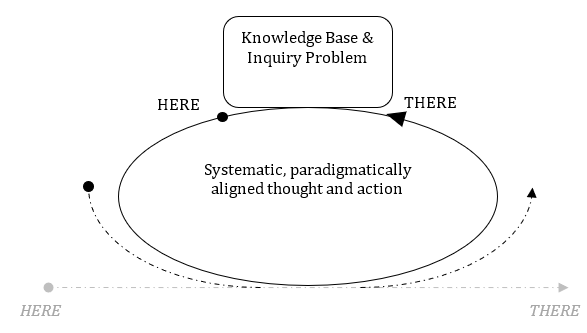
Figure 1. Here-to-There (e.g., “T” factor) Representation of Entering and Exiting Inquiries from Different Knowledge States
Methodology as an Idealization
As an idealization, methodology represents a distillation of the inquiry process to its purest, most logical form. The idealization of methodology extends philosophical assumptions about inquiry into a hypothetical, almost theoretical, model blending foundational principles of how nature is to be interrogated, regulative ideals for how to unite the concepts of experience, and experience with and/or knowledge of methodological decisions that have shown themselves to have value in practice (Kant,2007; Kaplan,1998; Popper, 2002). The result is an explicit abstraction of all the underlying choices and assumptions (implicit and otherwise) involved with engaging in inquiry.
As a matter of foresight, the methodological idealization may help with the initial conceptualization of an inquiry process. As a matter of hindsight, the idealization is a reconstructed conceptualization of the inquiry process. However, reconstruction depends upon our ability to (a) describe what we were thinking when a certain outcome occurred, which can be messy, i.e., “logic-in-use” (Kaplan,1998, p. 8); (b) rationalize the logic used into a more comprehensible process, i.e., “rational reconstruction” (p. 12); and then (c) reconstruct a neat and orderly abstraction in hindsight, i.e., “ reconstructed logic” (p.8). As a consequence, our idealized hindsight may be less of a description of practice and more of a refined model of practice, e.g., “the dream we report is not what we dreamt but something more sensible, more intelligible on the face of it” (p. 12). Unfortunately, this distance from practice may risk the status of honorifics (Bryman, 2008; Kaplan, 1998).
Methodology as a System of Rules and Procedures
As something slightly less abstract than an idealization of the logic of practice, methodology has also been defined as the set of rules and procedures governing the practices of inquiry. Formed from accepted and successful practices, the rules and procedures together comprise the conventions of the research enterprise. The conventions serve as procedural models upon which research is based, and against which claims for knowledge are evaluated (Frankfort-Nachimias &Nachimias, 1992; Guba & Lincoln, 1989; Popper, 2002). Conventions of the research enterprise may seem somewhat similar to the definition of methodology as an idealization of the inquiry process. However, conventions represent something less than a pure logic of inquiry in the same way that the rules of chess might represent something arguably very different than a pure logic or strategy of board games. Rules and procedures dictating that one does A then does B under circumstance 1 yet does C then does D under circumstance 2 do not idealize the logic of thought and action; rather, they more simply proceduralize it (Popper, 2002).
Conventions may play roles in initial planning of inquiries or in helping educate or inform others of ways they might accomplish their inquiries by providing accepted models or conventions. However, there is some caution to be taken with conventions. The application of methodological conventions can proceed on implicit and unrecognized givens with efficiency and precision (e.g., repetition of how we were trained in grad school or shown in practice). However, if the foundational method choices are made explicit, then the inquirer is both a methodologically informed decision-maker (rather than an expert convention follower) and better positioned to achieve reflective understanding of the nature of fruitful practice. Because the potential normative force may be great, there is a risk with conventions advancing an unrealistic educational orthodoxy or perception as a proselytizing armchair methodologist (Becker, 1970; Bryman, 2008;Guba, 1990;Kant,2007; Kaplan,1998;Popkewitz, 1990).
Methodology, Methods, and Techniques: Distinctions and Questions of Mixing
Related to Kaplan’s (1998) distinctions of methodology as epistemology, methods, techniques, and honorifics, conversations about mixed methods research include discussion about methodology to address distinctions for what actually gets mixed in mixed methods (Greene, 2006, 2008; Hitchcock & Onwuegbuzie,2019;Niglas, 2010). For example, mixing can occur between data types, specific analytical techniques, methods of data collection and/or analysis, intra-paradigm methodologies, inter-paradigm methodologies, or even projects. Greene (2006, 2008) proposed a methodology for mixed methods consisting of four domains: (a) assumptions and philosophical perspective, (b) logic and quality issues, (c) specific techniques and procedures, and (d) sociopolitical commitments. Hitchcock and Onwuegbuzie distinguished different levels of methodological analyses in a hierarchy of approach, method, or technique, where approaches are whole systems of procedures and steps, methods are a set of steps or procedures within a part of an approach, and techniques are a single step or procedure within a method. Consequently, a prerequisite to the discussion of mixing is the definition of, and distinction among, what we assume to mix. Upon satisfying the prerequisite definition issues, the rather sophisticated and contentious discussion of the suitability and commensurability of paradigmatic mixing can then transpire (Guba, 1990; Guba & Lincoln, 1988, 2005; Howe, 1988; Johnson e t al., 2007; Lincoln, 20 09; Lincoln & Guba, 2000; Lincoln et al.,2023; Morgan, 2022).
Mixed method conversations highlight, in the practical contexts of asking questions, designing studies, and interpreting data, that our conceptions of methodology exist at varying granularities and within varying philosophical contexts of knowledge production. These conceptions can range from the application of very specific and refined techniques for small steps or phases of the research process (Becker, 1970; Bryman, 2008; Kaplan, 1998), to collections of techniques comprising methods of data collection and analysis (Howe, 1988; Kaplan, 1998; Popkewitz, 1990), or even to the interpretation of results under different epistemological paradigms (Guba, 1990; Guba & Lincoln, 1988, 1989, 1994, 2005; Howe, 1988; Lincoln & Guba, 2000; Lincoln et al.,2023).
Methodology as a Complete Array of Choices
A final, and most inclusive, definition of methodology positions the phenomenon of inquiry as the complete array of choices in an overarching inquiry scheme (Crotty, 1998; Guba & Lincoln, 1989; Kerlinger, 1973). These choices involve decisions about guiding philosophical assumptions, how assumptions are enacted through the research design, and how data is interpreted; everything that connects the problem investigated with a solution as a way of knowing and coming to know. That is,
Methodology is best understood as the overall strategy for resolving the complete set of choices or options available to the inquirer. Far from being merely a matter of making selections among methods, methodology involves the researcher utterly, from unconscious worldview to enactment of that worldview via the inquiry process. (Guba & Lincoln, 1989, p. 183)
Examples of what was meant by the complete set of choices have been articulated in a few different ways. Common among them was the view that how we inquire is connected to what we know as a result; that is, knowing and action are linked. Consequently, the complete set of choices available to the inquirer spans considerations of the metaphysical assumptions underlying the inquirer’s stance and the nature of knowing, the criteria of quality against which inquiry goodness is judged, the idealized model of inquiry, the system of rules and procedures followed, the style of systematic thought used, and the ways we make distinctions among (and choices between) the methodologies, methods, and techniques employed. Lincoln and Guba’s body of work captured the connections between knowing and action from the perspective of their axiomatic theory. When operationalized, the theory extended basic assumptions about knowing and values into actions of inquiry, i.e., operational characteristics of inquiry (Guba, 1987;Guba & Lincoln, 1989, 1994, 2005; Lincoln & Guba, 2000; Lincoln et al., 2011,2023).
Two chapters in the Paradigm Dialog (Guba, 1990) further fleshed out what this complete set of choices might look like. Popkewitz (1990) defined methodology as a matrix of mutually shaping problems, concepts, assumptions, values, dispositions, curiosities, questions, conventions, and procedures for collecting and analyzing data that operate in reciprocal relation with each other in the production of knowledge. The matrix, as a sum of its parts, is further embedded in the specific contextual complexities of both the phenomenon of study and the social-historical conditions within which the study is undertaken. The mutual relation of the parts of this matrix of choices shapes each other in the whole of inquiry, therefore connecting methodology to both “legitimate knowledge and how that knowledge is obtained and ordered” (p. 52). Schwandt (1990) emphasized that “to study a methodology is not simply to examine the exercise of method, it is to study a way of knowing; in other words, methodology and epistemology are linked” (p. 262). Similar to Popkewitz, Schwandt recognized that knowing is shaped by the interrelation between how we go about obtaining knowledge of a phenomenon and what we consider representative of legitimate knowledge of the phenomenon.Also in agreement with Popkewitz, Schwandt imagined methodology as a “meta-framework for understanding the exercise of method, that is, for examining the principles and procedures by which we formulate inquiry problems, develop answers to those problems, and evaluate the correctness and profundity of those answers” (p. 262).
RQ2.How can methodology be comprehensively defined?
A comprehensive definition of methodology requires acknowledgement that methodology is both a discipline and subject matter. As a discipline, methodology is the area of study concerned with the systematic analysis of the assumptions and practices of research. As the subject-matter of study, methodology is the constellation of inquiry choices about methodical practice that span decisions about ways of knowing at the most abstract level, decisions about the application of specific analytical techniques of the research process at the most concrete level, and decisions about how to reconcile the system of rules and procedures of the research enterprise with method practice somewhere in the middle.
RQ3.What components comprehensively comprise a methodology?
The literature on methodology did not frequently list methodological components explicitly in the same way, say, common research designs might be described in terms of a recipe of sampling, data collection, and data analysis techniques. Consequently, a more focused way to examine literature for implicit ideas was needed. For this focus, I drew upon Goldman’s notion of features of methodical practice. In Pathways to Knowledge, Goldman (2002) posed the following methodological questions:
If some beliefs are regularly aligned with the truth, how does that transpire? What features of the methods or practices used in forming these beliefs account for this result? If another set of beliefs is not so well aligned with truth, what features of the belief-forming methods or practices produce this result? (p. 187)
Thus, to locate methodological components, I used as a lens those methodological features of formal belief-forming processes, and the choices about those belief-forming processes, that commonly account for alignment between what inquirers believe can be known and the actual beliefs formed from their inquiries. Understanding both the productive and unproductive methodological features seemed key to understanding methodological choices, because, as Kaplan (1998) implied, methodology is less about the right or wrong way of doing things and more about whether anything gets done by it. Accordingly, review of literature for methodological components focused on methodological features of the inquiry process that could be reduced to a methodological choice with influence on the how of inquiry.
Review of literature for components revealed numerous decision points that were synthesized and grouped into four broad, high-level choice sets about which inquirers make methodological decisions: (a) choices relating to worldview, (b) choices relating to inquiry quality, (c) choices relating to the structure inquirers impose on the world so it will reveal something specific, and (d) choices relating to variations in specific technique. Grouped in this way, each choice set can be thought of as a methodological meta-concept comprised of numerous more specific choices upon which inquirers make methodological decisions. Although there is a hierarchical quality to the choice sets, they need not be addressed in any particular order so long as the decisions made across choice sets are in alignment.
Choices Relating to Worldview
Much of the literature on worldviews addresses issues with the intent of illustrating the basis of paradigms of disciplined inquiry (e.g., Lincoln e t al., 202 3). Here, issues of worldview were addressed to illustrate the types of foundational methodological choices that carry profound influence on the how of inquiries. Even though these methodological choices relating to worldview may be seen as philosophical, they nonetheless heavily influence the distinct features of our methods and methodical practices in implicit and explicit ways.
One of the more common methodological choices of worldview was epistemology, a choice regarding assumptions about the nature of knowledge. Arguably, methodology and epistemology are linked. However, epistemology and methodology are not synonymous. Epistemology is only one piece of a more holistic set of meta-physical assumptions. The set of meta-physical assumptions together defines one's paradigm of inquiry. Yet, methodological choices of worldview are not limited to the choice of paradigm of inquiry. Additional assumptions, not necessarily metaphysical in nature, can also be considered such as the nature of truth (Guba & Lincoln, 1988, 1989), knowledge (Lincoln et al.,2023), and interpretation (Lincoln & Guba, 1985); ethics (Lincoln e t al.,2023); accommodation and commensurability (Lincoln e t al.,2023); and conceptualizations of subjective and objective (Guba, 1990). Together, these methodological choices related to worldview shape how an inquirer sees the world and chooses to both interact with and interpret that world.
Choices Relating to Inquiry Quality
One might wonder, in what ways are the criteria of quality methodological choices? They become choices in at least three ways. First, there is the choice of whether any particular criterion of quality will be considered heavily or ignored altogether. Second, there is a choice around how much the actual design of the inquiry will be planned around the anticipation of achieving a high degree of alignment with some criterion or set of criteria. Lastly, there is judgment in hindsight about the extent to which the inquiry conducted achieved the anticipated alignment. These choices of quality are somewhat different animals than mere characteristics of good research. It is the more philosophically oriented criteria of alignment with regulative ideals that are of focus here.
The criteria used to assess alignment with regulative ideals typically fall under the terms goodness or quality criteria. The criteria most broadly differ with respect to a focus on assessing the quality of the inquiry process (Guba, 1981; Guba & Lincoln, 1981, 1982; Lincoln, 1986; Lincoln et al., 2011; Lincoln & Guba, 1985, 1986), the inquiry product (Guba, 1990; Guba & Lincoln, 1994; Lincoln & Guba,1988,19 89, 1990; Lincoln et al., 2011, 2018, 202 3), and the resulting theories (Lincoln &Lynham, 2011). Other conventions for organizing and conceptualizing criteria of quality include criteria of rigor, ethical criteria, validity criteria, and even common versus paradigm-specific criteria.
Choices Relating to Inquiry Structure
Choices relating to the structure we impose on the world through our inquiries were subdivided into three choice subsets, building upon Kerlinger’s (1973) hierarchical distinctions between the research plan, structure, and strategy: (a) Bounding issues of the research plan, (b) Convergence issues of the research structure, and (c) Divergence issues of the research strategy.
Bounding issues of the research plan. Kerlinger (1973) defined the research plan as “the overall scheme or program of the research. It includes an outline of what the investigator will do from writing the hypotheses and their operational implications to the final analysis of the data” (p. 300). I expanded upon Kerlinger’s definition of the research plan with Guba and Lincoln’s (Guba, 1978, 1979; Guba & Lincoln, 1981; Lincoln, 2005; Lincoln & Guba, 1985) boundary problems, resulting in the subset heading called bounding issues of the research plan. These methodological choices lead to establishing a variety of boundary conditions for the scheme or program of research, and can include:
The entry and exit conditions for inquiries (Guba & Lincoln, 1988;Lynham,2000; Yin, 2018)
The type of research problem the inquiry is intended to address (Booth et al., 2008; Guba, 1978, 1979; Guba & Lincoln, 1981; Lincoln, 2005; Lincoln & Guba, 1985)
The mode of inquiry for working on the research problem (Guba, 1978; Guba & Lincoln, 1981)
Hegemonic issues around what counts as a research problem, what research problems warrant investigation, or what the benefit of the inquiry is or should be (Guba & Lincoln, 1988; Lincoln et al.,2023)
Issues of representation and legitimation that address how the perspective of the other may be represented authentically in inquiries and the authority given to texts produced from inquiries (Denzin et al.,2023).
The scope and logistics of inquiry related to how narrowly or broadly focused the inquiry will be and when, how, and by whom these activities will take place (Guba, 1978; Lincoln & Guba, 1985).
Convergence issues of the research structure. Kerlinger (1973) positioned the research structure as something more specific than the research plan; “the outline, the scheme, the paradigm of the operation of the variables. When we draw diagrams that outline the variables and their relation and juxtaposition, we build structural schemes for accomplishing operational research purposes” (p. 300). I expanded upon Kerlinger’s definition of the research structure with Guba and Lincoln’s (Guba, 1978; Guba & Lincoln, 1981) problems of convergence and Denzin et al.’s (2023) definition of the research design, yielding a subset heading called convergence issues of the research structure.
Given the boundaries of the inquiry from the research plan, the convergence issues of the research structure represent distinctive choices about structuring the world with conditions, groupings, categories, analytic units, safeguards, and processes for deriving, navigating, and operating within these structural features. The philosophical issues of question and answer, and the inquirer’s role in connecting them, are situated in the empirical world through the convergence of choices of the research structure. These types of choices that result in a structured way to study a portion of the world can include:
A reductionist versus expansionist stance on the degree of control and constraint imposed upon the inquiry’s antecedent conditions and outcomes (Guba, 1978, 1979; Guba & Lincoln, 1981).
The extent to which inquiry activities should be structured within linear, sequential processes or structured within nonlinear, cyclical processes (Guba & Lincoln, 1988).
Implementation of a fixed versus emergent research framework/design (Guba, 1978, 1979, 1981; Guba & Lincoln, 1981, 1982; Lincoln & Guba, 1985).
The setting of the inquiry in a contrived or natural environment (Guba, 1978, 1981; Guba & Lincoln, 1981, 1982; Lincoln & Guba, 1985).
The role of context in the inquiry (Guba, 1978).
The nature of the analytic unit as deconstructed variables versus more holistic, complex patterns among the various aspects of study (Guba, 1978; Guba & Lincoln, 1981).
Divergence issues with the research strategy. Kerlinger (1973) defined the research strategy as “the methods to be used to gather and analyze the data. In other words, strategy implies how the research objectives will be reached and how the problems encountered in the research will be tackled” (p. 300). I expanded upon Kerlinger’s definition with Guba and Lincoln’s (Guba, 1978; Guba & Lincoln, 1981) problems of divergence and Denzin et al.’s (2023) definition of the research strategy for a third choice subset called divergence issues of the research strategy. Given the prior bounding and structural choices, the divergence issues of the research strategy put the research plan and structure in motion with actionable methods for collecting, analyzing, and thinking about data. That is, the bounded plan and defined structure diverge to strategically include data about the phenomenon of interest. These divergence choices can include:
The timing of the specification of data collection and analysis plans a priori to the inquiry, a posteriori to the inquiry, or even a form of logic-in-use that systematically unfolds throughout (Guba, 1978; Guba & Lincoln, 1981).
Determining where (i.e., time and place) and from whom units of observation will be measured (Guba, 1978; Guba & Lincoln, 1981; Lincoln & Guba, 1985).
How to gain access to the units of observation based on the inquiry goals, i.e., the sampling strategy (Lincoln & Guba, 1985; Patton,2014)
The rules for inclusion and exclusion of a unit of observation (Guba, 1978; Guba & Lincoln, 1981).
Data collection strategies about measurement in action that generate instances of units of data (Guba, 1978; Guba & Lincoln, 1981; Lincoln & Guba, 1985).
Stopping rules about when there are a sufficiency of data for the purpose and methodological framing of the inquiry (Guba, 1978; Guba & Lincoln, 1981; Lincoln & Guba, 1985).
Data analysis strategies about how to transform analytic units into information and information into knowledge claims (Lincoln & Guba, 1985).
How we reason from premise to conclusion through (and with) our data, i.e., the logic of analysis (Lincoln & Guba, 1985).
Choices Relating to Variations in Specific Technique
Methodological choices about variations in technique are the specific disciplinary choices made about the ways to manipulate and interpret data to transform it into information. The choices in technique may include forms of instrumentation or tools for analyzing data, but also include the very specific manner of instrumentation and analysis used in particular contexts and conditions that are considered optimal by the research community. Consequently, methodological choices about how to employ specific techniques tend to be highly embedded in disciplines of practice. In this sense, a scientist skilled at the methodology of the discipline is well versed in the very specific, and often compartmentalized, practices of various steps or phases of the research process directed towards the specific phenomenon that is studied under somewhat consistent disciplinary conditions. As a consequence, methodology, when viewed through the lens of its nuanced and discipline-embedded variations in specific technique, can be understood as inclusive of both choices in method(s) and choices among variants in the application of method given what is considered the cutting edge or popular way of doing things (Bryman, 2008; Kaplan, 1998; Popkewitz, 1990).
Choices at the level of specific technique are therefore narrow enough in application to only be descriptive of a small part of the whole of the inquiry process, and often, only a description of a variant to the particular methods of that small part of the inquiry process for a subgroup of discipline-embedded scientists. These variants may be generally classified as choices related to instrumentation, choices related to preferred measures, and choices related to data manipulation techniques. Choices about instrumentation are extensions of the choices about data collection strategies, directed more specifically to the data gathering. Choices about preferred measures relate to preferences about the type of values that should result from the act of measurement and what is implicitly preferred for paradigmatic purposes. Choices about data manipulation are extensions of the choices about data analysis strategies directed at the nuanced ways we refine potential deviations from quality criteria during the transformation of data into information and further bring our data into alignment with our analytical goals (Guba, 1979, 1981; Guba & Lincoln, 1981, 1982; Lincoln & Guba, 1985). For example, when we interview, we make numerous choices about the instrument (i.e., what we consider the instrument and the inquirer relationship to it), the questions asked (i.e., their form, importance, order, wording), the interview protocols and procedures, and so forth. Similarly, we make numerous choices about how (and when) to organize, think about, chunk, segment, code, combine, and/or interpret the interview responses. At this level of methodological choice, we aren’t simply choosing to conduct interviews; rather, we are engaging with phenomena that are entrenched in disciplinary interests, conventions, and worldviews.
RQ4.How might methodology be conceptualized, inclusive of an overarching definition and component parts?
A conceptualization of methodology, inclusive of overarching definition (RQ1 & RQ2) and choice sets (RQ3), emerged from scholarly conversations that positioned methodology within the bounding notion of things that were philosophically abstract on the one hand and technically in depth on the other, i.e., a range-based framework. Guided by the range-based framework, the nine ways of thinking about methodology were visually organized in a hierarchy from broad philosophical issues to nuanced techniques of inquiry. The hierarchical organization showed how diverse, both practically and conceptually, the definitions of methodology were, yet how they can organize together under a singular conceptualization of methodological range to form a larger whole. The four methodological choice sets were also visually organized along a methodological continuum. Choices relating to worldview were positioned as macro or grand decisions. Choices relating to inquiry quality were positioned as mid to macro decisions. Choices relating to the structure we impose on the world through our inquiries were positioned as mid-range decisions. Choices relating to variations in specific technique were positioned as narrow-range decisions. The newly proposed integrative framework for definitions and choices is shown in Figure 2.
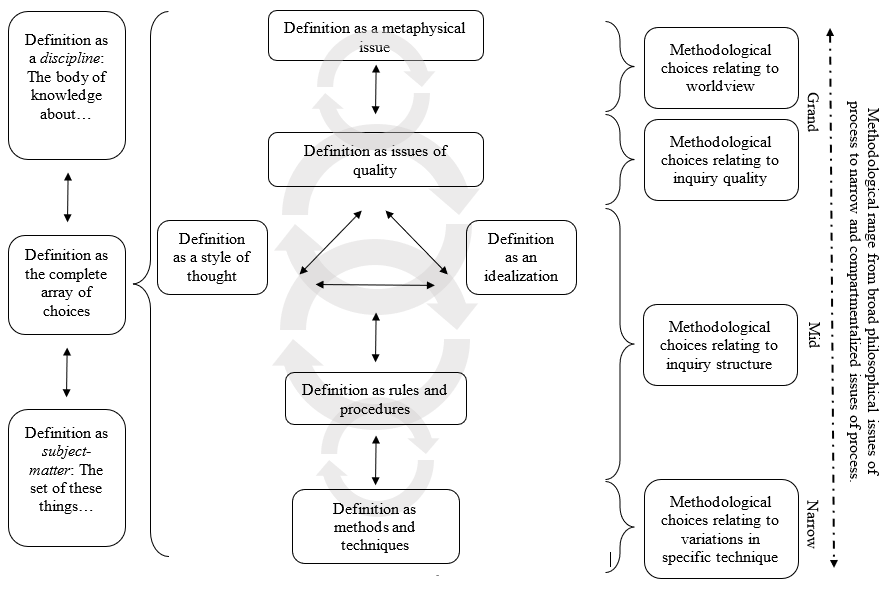
Figure 2. Definitions, Concepts, and Structure of Methodology
The range-based framework for methodology (Figure 2) captures a continuum of reflective issues upon which inquirers may make methodological choices in their inquiries. These reflective issues include methodological choices regarding: our assumptions about what can be known, how, and to what ends (i.e., methodological choices of worldview); what counts as legitimate knowing about a possible solution to a problem given merits of the inquiry process and product (i.e., methodological choices relating to inquiry quality); the ways the social world can be bound and defined so we can study a portion of it (mid-range choices of imposed structure upon the social world); and the specific ways we manipulate and interpret data to transform it into information (narrow-range methodological choices relating to variations in specific technique)
If we unpack Figure 2, then we can illuminate how certain ways of thinking about methodology might be connected with different types of methodological choices. When methodology is defined in terms of the philosophical assumptions (i.e., worldview assumptions about what can be known, how, and to what ends), then the way of thinking about methodology is likely connected to grand methodological choices such as how an inquirer sees the world and chooses to both interact with and interpret that world (e.g., the nature of the reality that will be inquired into, the ways epistemology and methodology are intertwined). For example, when interpreting interview data, do we choose to believe the phenomena inherent in the transcripts exists independent of and external to our objective awareness (i.e., dualism) or do we assume the phenomena are subjective constructions resulting from the interaction of the knower and the known (i.e., monism)? The former leads to further methodological choices about how to engage in a process of discovery that safeguards against bias, where the latter leads to further methodological choices about how to engage in a transactional process of co-construction.
When methodology is defined in terms of the regulative ideas found in goodness criteria, then the way of thinking about methodology is likely connected to mid to grand methodological choices such as against what standards for goodness should inquiry processes and products be judged or how much should the design of an inquiry be planned around those goodness criteria. For example, do we choose interrater reliability as a standard against which we assess the truth value (or internal validity) of findings revealed from analysis of interview data, or do we choose member checking with the participants who generated narratives as a standard against which we assess the truth value (or credibility) of findings?
When methodology is defined in terms of idealized processes, logics of inquiry, and normative rules and procedures, then the way of thinking about methodology is likely connected to mid-range methodological choices such as how rules and boundaries might be applied to impose structure on the world so it reveals something specific to us or how those rules define the inquirer’s role in that structured world as an actor working towards a conception of truth or belief. For example, we make bounding and structural methodological choices when the decision is made to collect data from subjects in intervention and control conditions that reveal attribution, from bounded cases that require description, from culture-sharing groups defined by common beliefs and behaviors, from participants who all share an experience with the same phenomenon, or from narrators of life stories.
When methodology is defined in terms of variations in the application of individual procedures (i.e., technique) or a specific set of procedures (i.e., method), then the way of thinking about methodology is likely connected to a narrow range of methodological choices, such as the choice of instrumentation, preferred measures, or data manipulation practices. For example, upon deciding to conduct interviews, more nuanced decisions remain regarding structured, semi-structured, and unstructured protocols; the role of the human instrument; and preferred data manipulation techniques focusing on individual word frequencies, semantic segments of texts, or whole texts.
Discussion
The proposed range-based framework represents methodology as a phenomenon of inquiry, a continuum of focal points guiding the act of coming to know, and a lens for the discipline of study. The value in this framework is twofold, simultaneously coat closet and spotlight, as described aptly by Maxwell (2013) and Herring et al. (2016).
At some level, any framework provides two key functions (Maxwell, 2013). First, it acts as a coat closet—it provides a high-level “big picture” view for making sense of what you see. Particular pieces of data, or specific research studies, which otherwise may seem unconnected or irrelevant to one another, can now be related to each other. The ability to find connections between studies is particularly important... Second, a framework can act as a spotlight, illuminating what you see, drawing attention to particular events or phenomena, and shedding light on relationships that may otherwise have gone unnoticed or misunderstood. (Herring et al., 2016, p. 3)
The range-based framework-as-coat-closet unites and makes explicit numerous definitions and choices related to the whole of methodology, painting a big picture that helps make sense of what social scientists mean when they refer to methodology. The framework-as-spotlight offers numerous points of focus upon which to have targeted methodological conversations.
Alignment to a range-based continuum created a bridge between ways of thinking about methodology and choices about methodology. In the range-based organization, there was collective wisdom to see where inquirers were choosing to focus their discussions within the broader methodological conversation. The framework represents the general form of methodology through both a constellation of methodological definitions and choices across a continuum of methodological range.
The organizational scheme can help consumers and producers of research engage in reflection upon the multitude of possible methodological choices bearing upon an inquiry in an explicit manner. However, the framework also serves to reframe paradigmatic decisions as methodological choices. What we know and how we know are related. For any given inquiry, we can make choices about the best fit nature of knowledge for the research problem, just as we can make choices about the best fit research questions, research design, or solutions. Choice of worldview, choice of quality standards, choices about how we impose structure on the world, and choices about specific procedures all inform and influence how we inquire; thus, they may be considered sets of related methodological choices.
Conclusion
In 1970, Howard Becker challenged social scientists, stating that methodology was “too important to be left to the methodologists” (p. 3). He took issue with methodology’s “predominantly proselytizing character” (p. 4) and the normative force placed on practice independent of practicing social scientists. Kaplan noted the same normative tension around methodology, but framed the practicing methodologist in a more flattering analogy:“ What I am protesting is the conception of the methodologist as baseball commissioner, writing the rules, or at any rate as umpire, with power to thumb an offending player out of the game. He is at best only a coach, and the merit of his recommendations rests entirely on what the play of the game shows to be effective” (Kaplan,1998, p. 25).
Becker called for shared responsibility between methodologists and those engaging in inquiries in understanding the issues of quality in method practices. However, the challenge to social scientists for methodological ownership should not be mistaken as a call for more practicing or academic “technologists” (Kaplan, 1998) or “product champions” (Bryman, 2008, p. 160) of specific refinements to techniques used in inquiry. Rather, the challenge was for a depth and breadth of understanding of the process of inquiry different from what might have been churned out through the efficiencies of the technique of formal training (Popkewitz, 1990).
Realization of the move to shared methodological responsibility may have been hindered by ambiguity around what constitutes methodology. The current framework provides a transparent range-based conceptualization of methodology, potentially opening the black box surrounding the term. In doing so, the framework may empower practicing researchers to more effectively locate conversations about methodology and understand the associated decision-points, not as steps they must follow, but as important methodological choices with which they should engage.
Recommendations
Future research should explore the comparative and analytic utility of the framework for understanding methodological choices for a single methodology, for multiple methodologies from across paradigms, such as case study or grounded theory approaches (i.e., inter-paradigm methodological analysis), and for multiple methodologies within paradigms (intra-paradigm methodological analysis). These types of methodological analysis could be particularly fruitful for research methods courses and doctoral students, narrowing or justifying their dissertation methodology. The proposed solution may also serve as a companion artifact for those teaching, learning, or applying the theory of paradigms of disciplined inquiry (Lincoln et al.,2023). As a tool aimed at helping inquirers better conceptualize their inquiry methodologies and better understand a methodology’s relation to the production of knowledge, the framework may also facilitate understanding how the choice of paradigm extends into the full array of methodological choices available in the practice of disciplined inquiry.
Limitations
The synthesis of literature on methodology was a highly interpretive process. A selective review may be susceptible to selection effects and confirmatory bias. However, by conceptualizing a range-based framework of methodological questions, I aimed to construct an organizational scheme that was both internally consistent and in harmony with a diversity of ideas on methodology. If successfully achieved, then I hope the work leaves the audience with a more sophisticated and informed sense of what they understand about their own methodologies, not necessarily because there is 100% agreement, but because the framework provides a new perspective against which to reflect on their own methodological understanding.
Generative AI Statement
In this work, no generative artificial intelligence (AI) tools were used in the data analysis, writing, or editing of this manuscript. All content is the original work of the authors.